Ray Hall is a California physics professor and a skeptic friend from way back. So yes, he is made of win.
He has also crafted arguably the best account on Instagram: physicsfun. And by "arguably" I mean that you and I might have an argument if you think there's a better Instagram account out there.
As a delightful bonus, physicsfun passed the million follower mark months ago: a reason to be hopeful for the future.
If you don't have an account on Instagram, physicsfun is a reason to get one.
Folks are taking note. ABC's Localish produced a nice segment on Ray and his Instagram.
S1E31 Crazy for Physics on Instagram
Instagram: physicsfun
Showing posts with label NCNAAPT. Show all posts
Showing posts with label NCNAAPT. Show all posts
Sunday, February 10, 2019


Tuesday, April 17, 2018
How to teach a class you've never taught before
Short answer: work hard.
Oh you wanted specifics? Keep reading.
One of the intricacies of education is that we can do the same thing year after year but nothing is the same or we can teach a completely different class and everything is still the same. Here are two examples:
I taught Physics every year for ten years. In that time period there have been new national and state standards implemented, two major bell schedule adjustments changing the number of minutes per day and week, furlough days have come and gone, new rallies and school traditions take instructional time, I have changed rooms four times, decided to forgo homework and gotten a new textbook twice. While I have taught "Physics" for ten years the class I would teach now is not the same as when I started.
I have also taught Conceptual Physics seven times in ten years. Several times there was a year in between in which I did not teach it. The population changed from freshmen only to freshmen and English Language Learners to open to all students to freshmen and special education only. The book has not changed but I have also had the same schedule and calendar changes I experienced for Physics. Because the class was meant to sere students that need additional support many of the pedagogical approaches and project based learning remains the same.
It can be hard to teach a course you have taught before with textbook or schedule or population or calendar changes. And then you may have to teach something completely different. Physics teachers often have to teach non-Physics courses because of traditionally lower enrollment in Physics classes compared to say Chemistry. In some schools they are the only Physics teacher and thus teach multiple levels. We tend to have more preps (different classes to teach) and change them up more often than other science disciplines. In your career you will probably at least once have to teach a brand-new-to-you course that makes you feel like a new teacher all over again. That's what happened to me this year with AP Physics C.
While I would love to say I met the challenge gracefully with my years of experience that was not always the case. Sometimes the workload crushed me. It definitely left my family neglected, our house in disorder and our lives chaotic. But as the end of the year approached I found that it got easier, not because the curriculum did but because I had developed a process. I found, through absolute trial and error, what helped me and what did not. I realized I went through the same steps in the same order at the start of each unit and it started to get (incrementally) easier.
And thus I decided to share, not because it is innovative or particularly amazing but because it could be helpful. I know someone out there, experienced or not, will be told in the coming weeks that they will be teaching (gulp) some class brand-new to them. It is daunting, makes you question whatever skills you thought you had and the workload downright sucks. So if some of this process helps you, great. If not, hopefully it helps lead you to your own.
Start with what you are given:
If you are inheriting the course from someone else you may find that you have also inherited a few filing cabinets worth of material. Or binders. Or shelves and shelves of "teacher resources." It is time consuming but worth it to go through this materials and do a first sort of what is and is not useful. Ditch the floppy disc versions of your textbook's teacher materials; ditch multiple copies of supplemental materials (unless there is more than one teacher). Check with your district about district copies of these resources, they may wish to consolidate extras in their warehouse for potential future use. You don't have to read every piece of paper left for you in a file cabinet now, you don't have to decide to adopt everything they left for you but you may want to keep it to give yourself the option.
As I moved into my new room this year there were eight total file cabinet drawers left for me for Physics and AP Physics. In my first sort I kept one copy of everything. I wanted to be able to read the labs he wrote but figured even if I decided to do the same ones I would probably be retyping it. I wanted to be able to see what his tests looked like, but knew I didn't need a class set. I kept a copy of his handwritten lecture notes so I could see how he implemented material, even though I planned to make powerpoints. I kept the manila folders, overheads and single sided paper to reuse as scrap paper. In the end, I filled four full size recycling bins with the paper I discarded, that was just the double-sided stuff. What I kept fit in two 4" binders in page protectors. I separated the stuff by unit, or at least by what I thought was by unit at the time. I was left with no digital files, except for uneditable pdfs I was able to download from his website before the district took it down.
As the year has progressed I started every unit going through what I was left. I looked over and digitized the lecture notes (you can copy it into a tablet or just scan it) to see how the material was presented before. If there was a worksheet that I wanted to use I would retype it as it was at first. I then did the worksheet myself and edited it how I wanted to for my own kids. Basically I took a look at what was done before as a guide, not to follow exactly but just for comparison. It provided a place to start, so I didn't have to start from scratch. There were plenty of worksheets, labs, etc. that I took this second look to and tossed aside. If you are lucky enough to start a new-to-you course that someone else teaches, start with everything they have. You can change things but it is invaluable to see how someone else teaches it, for better or worse.
Textbook resources:
While you may or may not use your textbook, electronic or print, your district has probably adopted one. Looking through it can be helpful if you have to learn or relearn material. I would read and take notes on each chapter, so that I could experience how the material was introduced just like my kids would. Most publishers have digital teacher resources now, either for download or on their website. My publisher has answer keys, lecture powerpoints, test banks, image galleries, simulations and more. So as to not re-invent the wheel, for each unit I started my lecture powerpoints using the textbook ones as a base. As the year progressed less and less of the original remained but it saved me time when I had so little. While using pre-made resources is not ideal, you should personalize your curriculum for yourself and your students, it is not the worst starting place. In later years of teaching the course you will probably use your own materials more and more.
Find reliable resources:
No class should be taught by textbook alone. Finding a few trusted and reliable resources for your class is important. This may be a professional networking site or another teacher's website or even social media. I found helpful materials on a wiki page, PrettyGoodPhysics, that will sadly need to relocate. There were a few YouTube Channels that provided consistently good tutorials by subject for myself and my students. Sometimes it would be for a different course (AP Physics 1, 2 or Honors Physics) but good video lessons are good video lessons regardless. I recommend Flipping Physics, Dan Fullerton's APlusPhysics, Mrs. Twu's video tutorials and AKLectures Physics series. If I needed to review a topic, or more importantly to learn what to emphasize for my students, it was very helpful watching other teachers teach it.
Social media turned out to be one of my greatest resources this year. I was able to find other physics teachers I did not know on Twitter and could follow or use hashtags like #APphysicsC to find resources by course. I was able to share data that didn't make sense and tag the equipment manufacturer who would often very quickly respond with suggestions. I once tagged @VernierST in the middle of a class period about weird looking data and got a response before my students left that period. They would continue to work with me for days as I tried to troubleshoot. Other teachers could jump on the thread and make suggestions or share sample data in the worst case scenario that nothing worked. I could share pictures of student work that made me scratch my head, asking more experienced teachers how I could prevent such incorrect problem solving in the future. As other teachers shared pictures of labs or demos they were doing I could save the picture for future use. I've even reached out to individuals to ask for their lab write-ups, ask follow-up questions or for advice. And they respond! Teachers usually like to help other teachers and many have been amazingly generous, sending me full curriculum guides, sample lecture notes, etc.
And perhaps most importantly, they don't judge much. On Twitter and on the College Board AP Physics C list serve I have posted problems that I cannot solve, or conceptual issues I still have that are preventing me from teaching it to my students. More experienced teachers have been able to respond with suggestions, solutions or alternate ways of approaching the problem. Everyone was patient as I usually started out my requests with "Since it's my first year teaching #APphysicsC..." And since I was putting that question out to anyone who could answer, people that could would and I would crowdsource some great solutions.
I also collected textbooks. Luckily we just adopted new AP textbooks so we had a textbooks from all the big publishers who had sent materials during the adoption process. I currently have six textbooks on my table, and I would often flip through all of them. For each chapter I would look through them to see if the example problems were different, how the material was grouped or arranged and to see what was emphasized. If my adopted textbook emphasized a type of problem that didn't appear in the other textbooks it helped confirm what was outside of the scope of the class.
Ask for help:
You know you should but it may still be difficult to admit that you don't know everything (yet) about your new course and you need help. Sometimes it was about the scope of the course, as my textbook includes a lot more than what is included on the AP Physics C exams. Sometimes the problem I tried to do out of the back of the chapter or on a worksheet I found was coming out wrong or I didn't have the answer to check it. Whatever it was I found that there were a few people I could ask for help. Most I knew personally through NCNAAPT but some I had met through my AP summer training or interactions online. I tried to spread out my questions, rotating through my "will help me" rolodex so that I did not take advantage of those willing to help me. I tried to figure it out by myself and not have to ask unless I was really stuck. My friends seemed to know this and did everything they could to help me when I asked.
Get trained:
I am a firm believer in proper science teaching professional development. Not all PD is good, don't get me wrong, but there are some consistently helpful training opportunities I always enjoy. For new teachers PTSOS and the Exploratorium's New teacher Institute of course. The national AAPT Summer and Winter meetings and your local AAPT meetings are full of the best-of-the-best resources shared among physics teachers. I find that the down-time in between workshops with other teachers can spark the best conversations and lead to lots of good shared ideas.
If the new-to-you course is an College Board Advanced Placement one you can also take a sanctioned AP training. They can be pricey but are often offered throughout the year. I had a hard time finding summer training for AP Physics C last year and had to travel to Texas to attend one. While it was helpful, I did not feel that one was enough to be comfortable teaching the course. I asked my district to send me to another one this summer and I'm crossing my fingers that there is more to learn.
Practice Practice Practice:
I found that, much like my students, I benefited from lots of practice. While I wouldn't do every problem in my textbook, I would probably work through twice as many as my students. I tried to do every conceptual question and did the ones that another AP Physics teacher using my book assigned. I figured that this more experienced teacher had probably already weeded out the problems that were too hard or awkward and these problems would be good for my students. Sometimes these still tripped me up and I decided early on that if I couldn't do the problem, I would not assign it to my students. By doing more problems I was able to see patterns in how the questions were asked or what they were asking for as well as improve my own problem solving technique. This also meant when it came to assessments I had more problems that I could solve then I had given to students to use.
One particularly helpful resource was an online workbook of released AP multiple choice and free response problems arranged by subject. This meant that I could look through the simple harmonic motion section and see all the problems ever asked on the AP exam about SHM. I could pick and choose the problems I wanted, combined with the textbook's test bank, to make my own tests. Sometimes working through all these extra problems seemed time consuming, especially if I wasn't going to assign them all, but overall it really helped my understanding.
Get organized:
This is easier for some than others, and I am not saying that everyone has to be a super clean desk all the time, but, if you are collecting new resources for a new class that doesn't do you any good if you can't find the cool thing your saved when the time comes. The easiest method is to create a folder for each unit and throw it all in there. At the start of the year I made a folder for each section of the AP Physics C objectives so that when I found a few resource I could sort it appropriately. This meant that prior to the start of the unit I would have maybe half a dozen to a dozen files before I really started to build the unit. As the unit progressed I would sort what I was using from the extra resources I wanted to keep from the assessments I would give. Since I tended to save everything I could get my hands on I would end up with a lot of files. For example, I started my magnetic field and forces unit with 5 digital files and two weeks later, before I've even written their test, I have 150.
Take care of you:
At the risk of sounding like a spa commercial, you need to take time out for yourself. Even though I was part time, developing new curriculum this year became my life. It was not unusual for me to work 12 hours a day, as in actual sitting down work, not just being awake for that long. I neglected my hobbies, cleaning, my health, because the work "had to get done." It will be the most work you've done outside of your first year to develop a new curriculum. Apologize to your family up front. However, do not lose yourself to it. Prior to this year I was trying to work on life-work balance and I failed miserably this year. I wish I had taken more breaks, spent more time with my kids, etc. but I didn't know how to get all my work done and do everything else. It got better as I developed this process and that's why I'm sharing. Hopefully having a game plan will help you develop your new-to-you course without drowning in your work. A burnt out teacher is not a helpful teacher.
To summarize:
1. Start with what you are given.
2. Try textbook resources.
3. Find reliable resources
4. Ask for help
5. Get trained
6. Practice Practice Practice
7. Get organized
8. Take care of you.
That's it, just 8 easy steps! (Totally sarcastic by the way)
It will be tough but by trying to focus on what I knew worked for me, I've almost gotten through it. As I can almost see the bright light on the other side believe me when I say you will too. Good luck!
Oh you wanted specifics? Keep reading.
One of the intricacies of education is that we can do the same thing year after year but nothing is the same or we can teach a completely different class and everything is still the same. Here are two examples:
I taught Physics every year for ten years. In that time period there have been new national and state standards implemented, two major bell schedule adjustments changing the number of minutes per day and week, furlough days have come and gone, new rallies and school traditions take instructional time, I have changed rooms four times, decided to forgo homework and gotten a new textbook twice. While I have taught "Physics" for ten years the class I would teach now is not the same as when I started.
I have also taught Conceptual Physics seven times in ten years. Several times there was a year in between in which I did not teach it. The population changed from freshmen only to freshmen and English Language Learners to open to all students to freshmen and special education only. The book has not changed but I have also had the same schedule and calendar changes I experienced for Physics. Because the class was meant to sere students that need additional support many of the pedagogical approaches and project based learning remains the same.
It can be hard to teach a course you have taught before with textbook or schedule or population or calendar changes. And then you may have to teach something completely different. Physics teachers often have to teach non-Physics courses because of traditionally lower enrollment in Physics classes compared to say Chemistry. In some schools they are the only Physics teacher and thus teach multiple levels. We tend to have more preps (different classes to teach) and change them up more often than other science disciplines. In your career you will probably at least once have to teach a brand-new-to-you course that makes you feel like a new teacher all over again. That's what happened to me this year with AP Physics C.
While I would love to say I met the challenge gracefully with my years of experience that was not always the case. Sometimes the workload crushed me. It definitely left my family neglected, our house in disorder and our lives chaotic. But as the end of the year approached I found that it got easier, not because the curriculum did but because I had developed a process. I found, through absolute trial and error, what helped me and what did not. I realized I went through the same steps in the same order at the start of each unit and it started to get (incrementally) easier.
And thus I decided to share, not because it is innovative or particularly amazing but because it could be helpful. I know someone out there, experienced or not, will be told in the coming weeks that they will be teaching (gulp) some class brand-new to them. It is daunting, makes you question whatever skills you thought you had and the workload downright sucks. So if some of this process helps you, great. If not, hopefully it helps lead you to your own.
Start with what you are given:
If you are inheriting the course from someone else you may find that you have also inherited a few filing cabinets worth of material. Or binders. Or shelves and shelves of "teacher resources." It is time consuming but worth it to go through this materials and do a first sort of what is and is not useful. Ditch the floppy disc versions of your textbook's teacher materials; ditch multiple copies of supplemental materials (unless there is more than one teacher). Check with your district about district copies of these resources, they may wish to consolidate extras in their warehouse for potential future use. You don't have to read every piece of paper left for you in a file cabinet now, you don't have to decide to adopt everything they left for you but you may want to keep it to give yourself the option.
As I moved into my new room this year there were eight total file cabinet drawers left for me for Physics and AP Physics. In my first sort I kept one copy of everything. I wanted to be able to read the labs he wrote but figured even if I decided to do the same ones I would probably be retyping it. I wanted to be able to see what his tests looked like, but knew I didn't need a class set. I kept a copy of his handwritten lecture notes so I could see how he implemented material, even though I planned to make powerpoints. I kept the manila folders, overheads and single sided paper to reuse as scrap paper. In the end, I filled four full size recycling bins with the paper I discarded, that was just the double-sided stuff. What I kept fit in two 4" binders in page protectors. I separated the stuff by unit, or at least by what I thought was by unit at the time. I was left with no digital files, except for uneditable pdfs I was able to download from his website before the district took it down.
As the year has progressed I started every unit going through what I was left. I looked over and digitized the lecture notes (you can copy it into a tablet or just scan it) to see how the material was presented before. If there was a worksheet that I wanted to use I would retype it as it was at first. I then did the worksheet myself and edited it how I wanted to for my own kids. Basically I took a look at what was done before as a guide, not to follow exactly but just for comparison. It provided a place to start, so I didn't have to start from scratch. There were plenty of worksheets, labs, etc. that I took this second look to and tossed aside. If you are lucky enough to start a new-to-you course that someone else teaches, start with everything they have. You can change things but it is invaluable to see how someone else teaches it, for better or worse.
Textbook resources:
While you may or may not use your textbook, electronic or print, your district has probably adopted one. Looking through it can be helpful if you have to learn or relearn material. I would read and take notes on each chapter, so that I could experience how the material was introduced just like my kids would. Most publishers have digital teacher resources now, either for download or on their website. My publisher has answer keys, lecture powerpoints, test banks, image galleries, simulations and more. So as to not re-invent the wheel, for each unit I started my lecture powerpoints using the textbook ones as a base. As the year progressed less and less of the original remained but it saved me time when I had so little. While using pre-made resources is not ideal, you should personalize your curriculum for yourself and your students, it is not the worst starting place. In later years of teaching the course you will probably use your own materials more and more.
Find reliable resources:
No class should be taught by textbook alone. Finding a few trusted and reliable resources for your class is important. This may be a professional networking site or another teacher's website or even social media. I found helpful materials on a wiki page, PrettyGoodPhysics, that will sadly need to relocate. There were a few YouTube Channels that provided consistently good tutorials by subject for myself and my students. Sometimes it would be for a different course (AP Physics 1, 2 or Honors Physics) but good video lessons are good video lessons regardless. I recommend Flipping Physics, Dan Fullerton's APlusPhysics, Mrs. Twu's video tutorials and AKLectures Physics series. If I needed to review a topic, or more importantly to learn what to emphasize for my students, it was very helpful watching other teachers teach it.
Social media turned out to be one of my greatest resources this year. I was able to find other physics teachers I did not know on Twitter and could follow or use hashtags like #APphysicsC to find resources by course. I was able to share data that didn't make sense and tag the equipment manufacturer who would often very quickly respond with suggestions. I once tagged @VernierST in the middle of a class period about weird looking data and got a response before my students left that period. They would continue to work with me for days as I tried to troubleshoot. Other teachers could jump on the thread and make suggestions or share sample data in the worst case scenario that nothing worked. I could share pictures of student work that made me scratch my head, asking more experienced teachers how I could prevent such incorrect problem solving in the future. As other teachers shared pictures of labs or demos they were doing I could save the picture for future use. I've even reached out to individuals to ask for their lab write-ups, ask follow-up questions or for advice. And they respond! Teachers usually like to help other teachers and many have been amazingly generous, sending me full curriculum guides, sample lecture notes, etc.
And perhaps most importantly, they don't judge much. On Twitter and on the College Board AP Physics C list serve I have posted problems that I cannot solve, or conceptual issues I still have that are preventing me from teaching it to my students. More experienced teachers have been able to respond with suggestions, solutions or alternate ways of approaching the problem. Everyone was patient as I usually started out my requests with "Since it's my first year teaching #APphysicsC..." And since I was putting that question out to anyone who could answer, people that could would and I would crowdsource some great solutions.
I also collected textbooks. Luckily we just adopted new AP textbooks so we had a textbooks from all the big publishers who had sent materials during the adoption process. I currently have six textbooks on my table, and I would often flip through all of them. For each chapter I would look through them to see if the example problems were different, how the material was grouped or arranged and to see what was emphasized. If my adopted textbook emphasized a type of problem that didn't appear in the other textbooks it helped confirm what was outside of the scope of the class.
Ask for help:
You know you should but it may still be difficult to admit that you don't know everything (yet) about your new course and you need help. Sometimes it was about the scope of the course, as my textbook includes a lot more than what is included on the AP Physics C exams. Sometimes the problem I tried to do out of the back of the chapter or on a worksheet I found was coming out wrong or I didn't have the answer to check it. Whatever it was I found that there were a few people I could ask for help. Most I knew personally through NCNAAPT but some I had met through my AP summer training or interactions online. I tried to spread out my questions, rotating through my "will help me" rolodex so that I did not take advantage of those willing to help me. I tried to figure it out by myself and not have to ask unless I was really stuck. My friends seemed to know this and did everything they could to help me when I asked.
Get trained:
I am a firm believer in proper science teaching professional development. Not all PD is good, don't get me wrong, but there are some consistently helpful training opportunities I always enjoy. For new teachers PTSOS and the Exploratorium's New teacher Institute of course. The national AAPT Summer and Winter meetings and your local AAPT meetings are full of the best-of-the-best resources shared among physics teachers. I find that the down-time in between workshops with other teachers can spark the best conversations and lead to lots of good shared ideas.
If the new-to-you course is an College Board Advanced Placement one you can also take a sanctioned AP training. They can be pricey but are often offered throughout the year. I had a hard time finding summer training for AP Physics C last year and had to travel to Texas to attend one. While it was helpful, I did not feel that one was enough to be comfortable teaching the course. I asked my district to send me to another one this summer and I'm crossing my fingers that there is more to learn.
Practice Practice Practice:
I found that, much like my students, I benefited from lots of practice. While I wouldn't do every problem in my textbook, I would probably work through twice as many as my students. I tried to do every conceptual question and did the ones that another AP Physics teacher using my book assigned. I figured that this more experienced teacher had probably already weeded out the problems that were too hard or awkward and these problems would be good for my students. Sometimes these still tripped me up and I decided early on that if I couldn't do the problem, I would not assign it to my students. By doing more problems I was able to see patterns in how the questions were asked or what they were asking for as well as improve my own problem solving technique. This also meant when it came to assessments I had more problems that I could solve then I had given to students to use.
One particularly helpful resource was an online workbook of released AP multiple choice and free response problems arranged by subject. This meant that I could look through the simple harmonic motion section and see all the problems ever asked on the AP exam about SHM. I could pick and choose the problems I wanted, combined with the textbook's test bank, to make my own tests. Sometimes working through all these extra problems seemed time consuming, especially if I wasn't going to assign them all, but overall it really helped my understanding.
Get organized:
This is easier for some than others, and I am not saying that everyone has to be a super clean desk all the time, but, if you are collecting new resources for a new class that doesn't do you any good if you can't find the cool thing your saved when the time comes. The easiest method is to create a folder for each unit and throw it all in there. At the start of the year I made a folder for each section of the AP Physics C objectives so that when I found a few resource I could sort it appropriately. This meant that prior to the start of the unit I would have maybe half a dozen to a dozen files before I really started to build the unit. As the unit progressed I would sort what I was using from the extra resources I wanted to keep from the assessments I would give. Since I tended to save everything I could get my hands on I would end up with a lot of files. For example, I started my magnetic field and forces unit with 5 digital files and two weeks later, before I've even written their test, I have 150.
Take care of you:
At the risk of sounding like a spa commercial, you need to take time out for yourself. Even though I was part time, developing new curriculum this year became my life. It was not unusual for me to work 12 hours a day, as in actual sitting down work, not just being awake for that long. I neglected my hobbies, cleaning, my health, because the work "had to get done." It will be the most work you've done outside of your first year to develop a new curriculum. Apologize to your family up front. However, do not lose yourself to it. Prior to this year I was trying to work on life-work balance and I failed miserably this year. I wish I had taken more breaks, spent more time with my kids, etc. but I didn't know how to get all my work done and do everything else. It got better as I developed this process and that's why I'm sharing. Hopefully having a game plan will help you develop your new-to-you course without drowning in your work. A burnt out teacher is not a helpful teacher.
To summarize:
1. Start with what you are given.
2. Try textbook resources.
3. Find reliable resources
4. Ask for help
5. Get trained
6. Practice Practice Practice
7. Get organized
8. Take care of you.
That's it, just 8 easy steps! (Totally sarcastic by the way)
It will be tough but by trying to focus on what I knew worked for me, I've almost gotten through it. As I can almost see the bright light on the other side believe me when I say you will too. Good luck!
Wednesday, April 05, 2017
Brag, teachers, brag!
"I got a promotion!"
"I got the big sale!"
"My team won the tournament!"
"I won my case!"
"My thesis was accepted!"
"No one failed this semester!"
You can just hear Big Bird singing "One of these things is not like the others...." Generally, teachers have trouble bragging. I think some of it comes from the fact that our victories are not commonly talked about. Our daily successes are measured not in dollar signs, stocks or trophies (usually) but in the personal growth of our many students.
This is not to make the argument that teachers should "make more," although yes, they should. This popular spoken slam poetry "What Teachers Make," by Taylor Mali sets that argument to rest:
If we do brag they fall on the deaf ears of those that just don't understand. Our daily victories are very hard to quantify; often we "succeed" when a student just feels/ seems/ does "better." Depending on your grade level you may be building up students' confidence with verbal positive reinforcement, stamps, smiley faces or high fives. As teachers become more experienced, they can learn which students need more encouragement, which students need a bit more discipline and which need more slack.
Another person we should be encouraging is ourselves. It takes years for new teachers to be proud of themselves regularly. Even experienced teachers that do amazing things for their students everyday don't often share their accomplishments with others. My friends and family have learned not to ask "How is work going?" or be faced with a long tangent into pedagogy: "Well, the no homework experiment is going well but I didn't set up the last unit well and they fell behind in problem solving..." While we may share our students' progress or even their successes, we don't often share our role in their accomplishments. We self-deprecate our good work by mentioning the few mistakes that we make. We focus on the one lesson this week that flopped instead of the four that went well.
Sure, some students can learn without us. And some try not to learn just to spite us. But for most of our students each year, we do make a difference. That is something not only be proud of but to share with others.
I wouldn't share your assessment averages every time, but we all have those "proud teacher" moments when you're reminded "This, this right here is why I teach." Those are the moments to share.
I like this Edutopia post "Why Educators Need To Promote Themselves" by Annie O'Brian that outlines the problem as discussed in">Peggy Klaus' book, "Brag! The Art of Tooting Your Own Horn Without Blowing It." There are also psychology takes on when and when not to brag and general lists of how to brag without sounding like a jerk if you want to work on the skill. While excessive bragging is seen as conceited, selfish, annoying, [insert bad quality here], etc. sharing your successes honestly is beneficial.
And if you not for you, do it for your country. That may sound grandiose but in a changing political climate believed by many to be anti-science and anti-public education hearing about the good that comes out of our classrooms is very important. Somehow, teachers are seen both as selfless civil servants and corrupt union opportunists at the same time. Sharing the successes for you and your students publicly can help remind everyone that you do good work.
While they are few and far between for our profession, there are awards for teachers. Thinking beyond your district's Teacher Of The Year or your universities Faculty Of The Year awards, look to local or national teaching groups. The American Association of Physics Teachers (AAPT) has a whole list of awards and honors that can be bestowed on its members. So does the National Science Teachers Association (NSTA), the California Association of Science Teachers (CSTA) and the American Physical Society (APS). Want to go bigger? Dean Baird was awarded a Presidential Award for Excellence in Mathematics and Science teaching in 2012; read about his journey here. Our own Northern California/ Nevada section of AAPT (NCNAAPT) will be presenting the first teaching award in our section this spring. Nominate yourself or a colleague here.
Somewhere in all that alphabet soup there is an award for you! If you're still feeling shy about self-promotion, perhaps begin by nominating a colleague. As teachers we should be encouraging the good works of other teachers as much as our own.
You may not be comfortable shouting it from the heavens [yet] but start making it a habit to share just what a good teacher you are!
"I got the big sale!"
"My team won the tournament!"
"I won my case!"
"My thesis was accepted!"
"No one failed this semester!"
You can just hear Big Bird singing "One of these things is not like the others...." Generally, teachers have trouble bragging. I think some of it comes from the fact that our victories are not commonly talked about. Our daily successes are measured not in dollar signs, stocks or trophies (usually) but in the personal growth of our many students.
This is not to make the argument that teachers should "make more," although yes, they should. This popular spoken slam poetry "What Teachers Make," by Taylor Mali sets that argument to rest:
If we do brag they fall on the deaf ears of those that just don't understand. Our daily victories are very hard to quantify; often we "succeed" when a student just feels/ seems/ does "better." Depending on your grade level you may be building up students' confidence with verbal positive reinforcement, stamps, smiley faces or high fives. As teachers become more experienced, they can learn which students need more encouragement, which students need a bit more discipline and which need more slack.
Another person we should be encouraging is ourselves. It takes years for new teachers to be proud of themselves regularly. Even experienced teachers that do amazing things for their students everyday don't often share their accomplishments with others. My friends and family have learned not to ask "How is work going?" or be faced with a long tangent into pedagogy: "Well, the no homework experiment is going well but I didn't set up the last unit well and they fell behind in problem solving..." While we may share our students' progress or even their successes, we don't often share our role in their accomplishments. We self-deprecate our good work by mentioning the few mistakes that we make. We focus on the one lesson this week that flopped instead of the four that went well.
Sure, some students can learn without us. And some try not to learn just to spite us. But for most of our students each year, we do make a difference. That is something not only be proud of but to share with others.
I wouldn't share your assessment averages every time, but we all have those "proud teacher" moments when you're reminded "This, this right here is why I teach." Those are the moments to share.
I like this Edutopia post "Why Educators Need To Promote Themselves" by Annie O'Brian that outlines the problem as discussed in">Peggy Klaus' book, "Brag! The Art of Tooting Your Own Horn Without Blowing It." There are also psychology takes on when and when not to brag and general lists of how to brag without sounding like a jerk if you want to work on the skill. While excessive bragging is seen as conceited, selfish, annoying, [insert bad quality here], etc. sharing your successes honestly is beneficial.
And if you not for you, do it for your country. That may sound grandiose but in a changing political climate believed by many to be anti-science and anti-public education hearing about the good that comes out of our classrooms is very important. Somehow, teachers are seen both as selfless civil servants and corrupt union opportunists at the same time. Sharing the successes for you and your students publicly can help remind everyone that you do good work.
While they are few and far between for our profession, there are awards for teachers. Thinking beyond your district's Teacher Of The Year or your universities Faculty Of The Year awards, look to local or national teaching groups. The American Association of Physics Teachers (AAPT) has a whole list of awards and honors that can be bestowed on its members. So does the National Science Teachers Association (NSTA), the California Association of Science Teachers (CSTA) and the American Physical Society (APS). Want to go bigger? Dean Baird was awarded a Presidential Award for Excellence in Mathematics and Science teaching in 2012; read about his journey here. Our own Northern California/ Nevada section of AAPT (NCNAAPT) will be presenting the first teaching award in our section this spring. Nominate yourself or a colleague here.
Somewhere in all that alphabet soup there is an award for you! If you're still feeling shy about self-promotion, perhaps begin by nominating a colleague. As teachers we should be encouraging the good works of other teachers as much as our own.
You may not be comfortable shouting it from the heavens [yet] but start making it a habit to share just what a good teacher you are!
Thursday, January 16, 2014
Dan Burns updated his Science on The Simpsons page
 From Dan:
"Hello Science on the Simpsons fans, I have added 13 more clips to the website. I included more biology related ones so share it with your life-science colleagues. Don't worry, there are some new physics ones like "Faster than Sound" and "Black Hole 1 and 2". The new clips start with "Acid Rain" in the right column:
Science on The Simpsons
Remember these are for educational purposes only.
Dan Burns
Los Gatos High School"
Go take a look. But be warned, you may find yourself binge-viewing the clips!
Saturday, November 23, 2013
A wee set of photos from NCNAAPT FM13 Carondelet
NCNAAPT FM13
These are the best of what I got at the Fall Meeting of the Northern California and Nevada section of the American Association of Physics Teachers. The event was Saturday, November 16 at Carondelet High School in Concord.
All captured on my little spy-cam of a Canon PowerShot S100. It's not a speedy auto focuser, but it's so small as to be fairly innocuous. And it's a digicam rather than a DSLR, so no shutter noise. Trade-offs.
These are the best of what I got at the Fall Meeting of the Northern California and Nevada section of the American Association of Physics Teachers. The event was Saturday, November 16 at Carondelet High School in Concord.
All captured on my little spy-cam of a Canon PowerShot S100. It's not a speedy auto focuser, but it's so small as to be fairly innocuous. And it's a digicam rather than a DSLR, so no shutter noise. Trade-offs.
Sunday, November 03, 2013
The NCNAAPT Fall 2013 Conference is November 15-16 in Concord
The main meeting is on Saturday at Carondelet High School. Friday's social activities center around the Joint Genome Institute in very nearby Walnut Creek.
For the locations map and full program, follow the link below.
NCNAAPT Fall 2013 Conference Details
Friday, November 02, 2012
NCNAAPT Fall Conference at Sierra College

Get the full deets at this link:
NCNAAPT Fall Conference at Sierra College November 2-3
Be there or b^2!
Monday, February 20, 2012
Modeling workshops 2012 calendar
Jane Jackson recently announced the 2012 calendar for Modeling Instruction summer workshops.
Full details, instructions, and links here.
There's one in Northern California hosted by NCNAAPT's own web weaver, Lee Trampleasure and polished veteran, Don Yost.
Full details, instructions, and links here.
There's one in Northern California hosted by NCNAAPT's own web weaver, Lee Trampleasure and polished veteran, Don Yost.
Sunday, November 06, 2011
NCNAAPT UCB Conference recap
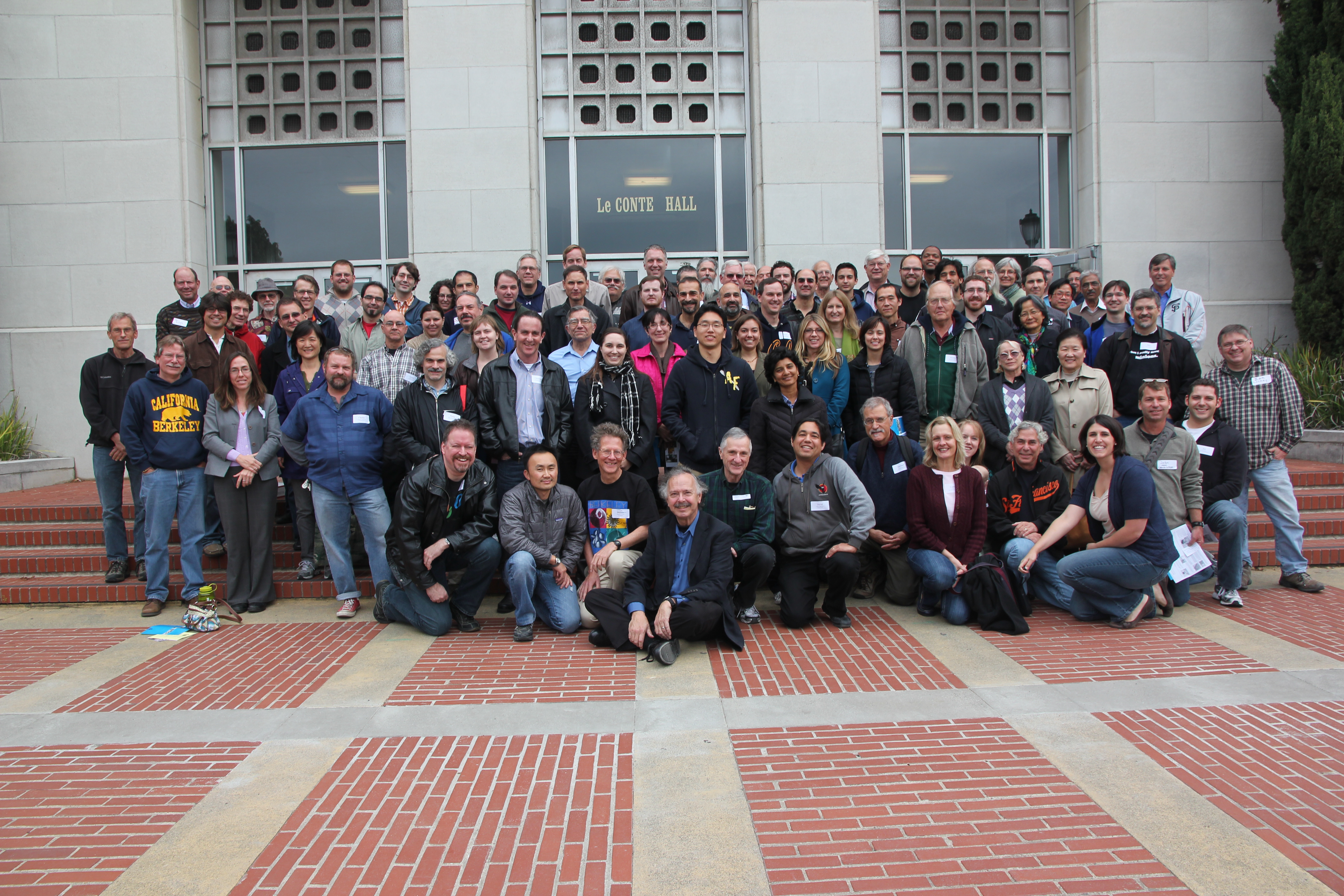
NCNAAPT Section Secretary Bree Barnett Dreyfuss has once again done a stellar job of recording and posting wall-to-wall coverage of our semi-annual conference. She snapped a nice group shot:

Check the links to her coverage of the...
Show & Tell
Keynote Speaker: Richard Muller
Roundtable Resources
And, of course, a gallery of photos.
Mark your calendars for the NCNAAPT Spring Conference: April 20-21, 2012 at Tahoe Community College in Lake Tahoe.
Check the links to her coverage of the...
Show & Tell
Keynote Speaker: Richard Muller
Roundtable Resources
And, of course, a gallery of photos.
Mark your calendars for the NCNAAPT Spring Conference: April 20-21, 2012 at Tahoe Community College in Lake Tahoe.
Joulies
Frank Cascarano of Foothills College showed and told us about Coffee Joulies at the NCNAAPT Fall Conference at UCB.
Nutshell: Stainless steel capsules contain a substance whose melting point is 140°F. Pour some 200°F+ coffee onto some Joulies, and the capsules absorb energy so as to melt the substance. This cools the coffee and liquifies the substance in the Joulies.
Once the coffee cools below 140°F, the substance in the Joulies "freezes," giving heat back to the surrounding coffee.
The point is bend the temperature vs. time graph of the cooling coffee to maximize the time during which the coffee is at optimal drinking.
Joulies are officially groovy!
Coffee Joulies from Coffee Joulies on Vimeo.
UPDATE: Marco Arment, creator of Instapaper, was underwhelmed with the real-world performance of Joulies.
Nutshell: Stainless steel capsules contain a substance whose melting point is 140°F. Pour some 200°F+ coffee onto some Joulies, and the capsules absorb energy so as to melt the substance. This cools the coffee and liquifies the substance in the Joulies.
Once the coffee cools below 140°F, the substance in the Joulies "freezes," giving heat back to the surrounding coffee.
The point is bend the temperature vs. time graph of the cooling coffee to maximize the time during which the coffee is at optimal drinking.
Joulies are officially groovy!
Coffee Joulies from Coffee Joulies on Vimeo.
UPDATE: Marco Arment, creator of Instapaper, was underwhelmed with the real-world performance of Joulies.
Shown & Told @ NCNAAPT UCB 11.05.11

Blog of Phyz posts on SciVals can be found here. At the Berkeley Show & Tell, I passed out "quarter-sheet" prints of the Scientist Valentines (printed 4 per letter-size sheet of paper).
Here's the source PDF for those.

Richard Wiseman demonstrated this phenomenon to us at The Amaz!ng Meeting 4 (2006). The context: including skepticism/critical thinking lessons into the physics curriculum is time well spent. One theme worthy of exploration is the fallibility of our cognitive processes, including our ability to create patterns where none exist; pareidolia. This exercise in back masking is audio pareidolia.
Jeff Milner has created and maintained a great page of back masking examples with appropriate user controls. Note: some clips are more compelling than others.
Here's an interactive Quicktime of the presentation, which featured Lady Gaga, Britney Spears, and Led Zeppelin.
Sunday, October 30, 2011
Fall NCNAAPT Conference @ UCB this Friday and Saturday!
Complete details can be found at the NCNAAPT website.
Some quick highlights:
· UC Berkeley Physics demo show Friday night.
· Noted "climate skeptic," Richard Muller, speaks Saturday morning on his course/book, "Physics For Future Presidents."
Check out the rest of the program on this PDF, and schedule your travel plans accordingly.
Sunday, January 30, 2011
PTSOS2: Heat Waves in Sacramento
Despite the chilly tule fog, a group of physics teachers gathered to discuss the pedagogy of heat and waves at Rio Americano High School yesterday. It was PTSOS2: Give Physics a Whirl.
We ran through kinetic theory, temperature, specific heat, and heat transfer in the morning. Demonstrations were demonstrated, with presentation tips aplenty. Corresponding presos were presented (with my usual admonitions about how bad PowerPoints can be). Lab activities from the Conceptual Physics Lab Manual: Activities · Experiments · Demonstrations · Tech Labs were discussed and summarized.
Specifics included conductometers, radiometers, radiators, Miracle Thaws, and many others. We can never resist the Leidenfrost effect. (A full episode of Jearl Walker's Kinetic Karnival is devoted to this topic.) That led us to busting the paranormal explanation of firewalking.
One highlight was Steve Keith's Rubens' Tube.

During lunch, we were treated to a surprise visit from the Physics Go Girls (Morgan and Riley), who brought treats. With their chartreuse db-T's, they could have been seen from outer space.

Their customized carbohydrate comestibles were enjoyed by participants and workshop leaders alike.

After lunch, we launched into mechanical waves and sound. We discussed the connection of vibrations to waves (without getting bogged down into the robust details of simple harmonic motion). We delved into the Bell Labs wave machine, a Doppler rocket, PhET sims, WavePort, and others. I really like WavePort for creating and analyzing sounds.
A roommful of Talkie Tapes was too silly to not take a video of.
The fact that some users often mishear the word "fun" led us on a tangent of audio pareidolia. Our visit to Jeff Milner's Backmasking website resulted in laughter (wincing, cringing) of varying degrees of propriety.
Steve piped some heavy gas (the eco-friendly freon replacement) through a song flute (recorder) so we could hear the difference that makes. Much like the Mythbusters Fun with Gas clip.
We ended the day with the real make-n-take: Steve Keith's newest and improved-est version of the ever-popular String Thing. (Here's the Exploratorium's version.)

I couldn't resist slowing the finished product down with my compact FH-100.
It was a great day! More photos can be found at my Flickr site.
PTSOS is sponsored by the NCNAAPT and made possible by a grant from the Karl L. Brown Memorial Scholarship fund.
We ran through kinetic theory, temperature, specific heat, and heat transfer in the morning. Demonstrations were demonstrated, with presentation tips aplenty. Corresponding presos were presented (with my usual admonitions about how bad PowerPoints can be). Lab activities from the Conceptual Physics Lab Manual: Activities · Experiments · Demonstrations · Tech Labs were discussed and summarized.
Specifics included conductometers, radiometers, radiators, Miracle Thaws, and many others. We can never resist the Leidenfrost effect. (A full episode of Jearl Walker's Kinetic Karnival is devoted to this topic.) That led us to busting the paranormal explanation of firewalking.
One highlight was Steve Keith's Rubens' Tube.
During lunch, we were treated to a surprise visit from the Physics Go Girls (Morgan and Riley), who brought treats. With their chartreuse db-T's, they could have been seen from outer space.
Their customized carbohydrate comestibles were enjoyed by participants and workshop leaders alike.
After lunch, we launched into mechanical waves and sound. We discussed the connection of vibrations to waves (without getting bogged down into the robust details of simple harmonic motion). We delved into the Bell Labs wave machine, a Doppler rocket, PhET sims, WavePort, and others. I really like WavePort for creating and analyzing sounds.
A roommful of Talkie Tapes was too silly to not take a video of.
The fact that some users often mishear the word "fun" led us on a tangent of audio pareidolia. Our visit to Jeff Milner's Backmasking website resulted in laughter (wincing, cringing) of varying degrees of propriety.
Steve piped some heavy gas (the eco-friendly freon replacement) through a song flute (recorder) so we could hear the difference that makes. Much like the Mythbusters Fun with Gas clip.
We ended the day with the real make-n-take: Steve Keith's newest and improved-est version of the ever-popular String Thing. (Here's the Exploratorium's version.)
I couldn't resist slowing the finished product down with my compact FH-100.
It was a great day! More photos can be found at my Flickr site.
PTSOS is sponsored by the NCNAAPT and made possible by a grant from the Karl L. Brown Memorial Scholarship fund.
Saturday, January 22, 2011
PhyzParty at my place!
PTSOS2/Sacramento is one week from today. Workshop 2, "Give Physics a Whirl" focuses on heat, waves, and sound. We discuss ideas, classroom instruction, labs and demos. Valuable goodies are distributed to participants!
Here's a list of likely topics:
HEAT
Measuring Temperature, Kinetic Theory, Thermal Expansion, Conduction, Convection, Radiation, Leidenfrost Effect, and more.
WAVES
Vibrations, Wave Mechanics, Doppler Effect, Bow/Shock Waves, Interference, Sound, and more.
Critical thinking, paperwork management, dealing with state assessments, and other topics may sneak in during the day. Computer simulations and video clips, too. Resources are "massively shared!" And participants are likely to build a make-n-take before all is said and done.
If you're a new physics teacher in Northern California, sign up! If you're an old physics teacher in Northern California who enjoys talking about the craft, sign up!
The workshop is hosted by Steve Keith and yours truly at Rio Americano High School, Saturday, January 29, 8:30am-4:30pm. Registration includes goodies (apparatus), goodies (treats), and lunch and is attractively priced at FREE! Register with Stephanie Finander at sfinander@sbcglobal.net
PTSOS is sponsored by the Northern California and Nevada section of The American Association of Physics Teachers (NCNAAPT) and made possible by a grant from the Karl L. Brown Memorial Scholarship Fund.
Here's a list of likely topics:
HEAT
Measuring Temperature, Kinetic Theory, Thermal Expansion, Conduction, Convection, Radiation, Leidenfrost Effect, and more.
WAVES
Vibrations, Wave Mechanics, Doppler Effect, Bow/Shock Waves, Interference, Sound, and more.
Critical thinking, paperwork management, dealing with state assessments, and other topics may sneak in during the day. Computer simulations and video clips, too. Resources are "massively shared!" And participants are likely to build a make-n-take before all is said and done.
If you're a new physics teacher in Northern California, sign up! If you're an old physics teacher in Northern California who enjoys talking about the craft, sign up!
The workshop is hosted by Steve Keith and yours truly at Rio Americano High School, Saturday, January 29, 8:30am-4:30pm. Registration includes goodies (apparatus), goodies (treats), and lunch and is attractively priced at FREE! Register with Stephanie Finander at sfinander@sbcglobal.net
PTSOS is sponsored by the Northern California and Nevada section of The American Association of Physics Teachers (NCNAAPT) and made possible by a grant from the Karl L. Brown Memorial Scholarship Fund.
Saturday, January 09, 2010
PTSOS Sacramento: Give Physics a Whirl 1/30/10
The next Physics Teacher SOS (PTSOS) Sacramento workshop will be held at Rio Americano High School on Saturday, January 30.
The focus will be heat, waves, and sound. Topics will include temperature, kinetic theory, heat transfer, phases, the Leidenfrost Effect, mechanical wave characteristics and properties, Doppler Effect, shock waves and sonic booms, interference and beats.
We will address these topics via demonstrations, computer sensors, simulations, and a make-n-take. And we'll discuss how these topics are assessed on the state's Physics CST. In any case, there will be flames!
The goodies are robust and worthwhile. Attendees will leave with treasures of knowledge and the high-quality materials needed to "work the magic" in their own classrooms on Monday (or any time thereafter).
Steve Keith will be leading the workshop with me. And our attendees bring the wisdom, insights, and curiosity that make PTSOS workshops work as well as they do.
We'd love to have all area physics teachers, new and old, along with us for a day of physics fun. If you attended the October workshop, you know the joy of PTSOS. If you missed our October session, you don't want to miss this one!
Register with Stephanie Finander: sfinander@sbcglobal.net. If you're in the San Juan Unified School District, the ERO SRN for this workshop is 1040215072.
The focus will be heat, waves, and sound. Topics will include temperature, kinetic theory, heat transfer, phases, the Leidenfrost Effect, mechanical wave characteristics and properties, Doppler Effect, shock waves and sonic booms, interference and beats.
We will address these topics via demonstrations, computer sensors, simulations, and a make-n-take. And we'll discuss how these topics are assessed on the state's Physics CST. In any case, there will be flames!
The goodies are robust and worthwhile. Attendees will leave with treasures of knowledge and the high-quality materials needed to "work the magic" in their own classrooms on Monday (or any time thereafter).
Steve Keith will be leading the workshop with me. And our attendees bring the wisdom, insights, and curiosity that make PTSOS workshops work as well as they do.
We'd love to have all area physics teachers, new and old, along with us for a day of physics fun. If you attended the October workshop, you know the joy of PTSOS. If you missed our October session, you don't want to miss this one!
Register with Stephanie Finander: sfinander@sbcglobal.net. If you're in the San Juan Unified School District, the ERO SRN for this workshop is 1040215072.
Subscribe to:
Posts (Atom)