Showing posts with label school. Show all posts

Sunday, October 25, 2020

A new letter grade for the pandemic: E

It is impossible to characterize everyone's experience with teaching and learning during the COVID-19 pandemic spread throughout the world by the novel coronavirus. 

Many teachers are working with unprecedented intensity to craft synchronous and asynchronous instruction that will cover and deliver academic content in an engaging and suitably rigorous way.

But the products of all this time, talent, and energy are not being universally absorbed by the students in the black Zoom thumbnails with muted microphones. There are stories in each one of those blank frames, covering a broad array of situations.

Many of us seem to have students who are completely disengaged. They are on our rosters, but we never see them, they are not in our Zooms, and they do not turn in assignments or take assessments. They rapidly descend into grades that are in the single digits, perhaps up to about 20%. 

But there are some who seem to be somewhat engaged. But their participation is scattershot. They fall below 60%, but remain north of 40%. I am wondering if an F is the best grade for them while schools are wholly shut down or (worse), engaged in the pure partial daycare service that goes by the name of "hybrid".

So what about a grade of "E" for them? Not an "F" grade of fail. But not really a "D", either. "E" for evidence of engagement.

As a practical matter, the best I can do for now is to expand my range for a "D–".

One thing that a number of us are seeing more and more of in our parent-teacher conferences is parents and students who want to take an F for this semester so that they can repeat the course for a better grade next I'm not a fan of that practice. [Side note: Physics and Conceptual Physics are scheduled to be replaced by Physics of the Universe in my district next year, so that practice will be messy.]

I would let students move on with Es. Otherwise there will be a pandemic of students wanting to repeat courses when schools reopen in a meaningful way.

It's just an idea for now. But I wonder if it's an idea that will make more and more sense the deeper we get into the pandemic.

What do you think?

Monday, July 06, 2020

My district's initial plan for 2020-21

My district plans to offer high school students three options as the 2020-21 academic year begins. 

1. On-site, face-to-face instruction (details TBD; may or may not involve physical distancing and a hybrid structure)
2. Distance Learning
3. Independent Study (K-8 students can also be homeschooled)

I sent this to my science department colleagues today:

As we consider returning to face-to-face, physically distanced instruction, let’s consider what has/hasn’t changed since the March 13 shutdown. Or things just worthy of consideration, period.

• There is no vaccine. The most optimistic estimates put vaccine implementation at late 2021. As in ... no vaccine throughout the entire 2020-21 school year. Seems cruel just to think about it, but not thinking about it may lead to poor decision-making.
• Predictions are difficult, especially when the future's involved. Experts seem to be convinced that a second wave will build in the fall. That presumes the first wave will subside prior to the fall. The first wave continues to escalate as of this writing.
• Therapeutics? Remdesivir (for those who can get it) may reduce hospitalization time by four days for those who pull through. That's not really much of a therapeutic. 
• We know transmission likelihood is increased when people congregate indoors.
• No school’s HVAC system was designed / can be easily modified to minimize virus transmission. Our HVAC doesn’t have HEPA filtration. I'd be surprised if we have any filtration at all. Some of us can endeavor to maintain a flow of fresh air by opening doors and window vents, but that’s case by case, and involves air temperatures that may not be conducive to learning, and it subject to day to day meteorological conditions. 
• What do we think about teenager discipline regarding mask-wearing and physical distancing? Every day they are on campus? Every period and during passing periods? Every student? 
• What do we think the consequences will be for students who violate safety protocols?
• The virus remains active in the region. People are infected with it every day. People die from it every day. Sacramento county is on the state’s watch list due its troubling C19 stats. We are in a viral hot spot.
• Parents are tired of providing daycare. They want their kids out of their house. They need day care to get back to their jobs. This factor seems to be trumping all other facts. 

Digging deeper into the ponderables and the realm of speculation ... and logistics that will eventually have concrete answers even if we don't know what they are now...

• Which students are most likely to be sent back to Face-to-Face schooling? And which ones will be kept away from school in Distance Learning? A purely academic / speculative question, but worth thinking about. 
• Will students in Distance Learning be able to maintain the course selections they made in the spring? I have a small AP Physics 2 class. What if half of them want F2F and half want DL? 
• If the DL requests reduce the F2F numbers on campus, will the district really maintain all the sections that were mapped out into the master schedule in the spring?
• Who has our best interests in mind is we navigate into the unknown: elected officials (or their health directors), the district, the union, who? I believe we are on our own here—even more than usual. And we know full well that policy-makers don't always make decisions based on science. 

The science seems clear on the virus: closing down suppresses infection rates and reopening leads to spikes. The virus spreads mainly through respiratory droplets and aerosols emitted when doing things like speaking. Enclosed spaces are conducive to transmission.

But human nature compels us to think we can get away with reopening if we simply engage in what seems like common-sense, general public health precautions: hand-washing, temperature checks, ask people maintain distance, don masks, and dole out copious squirts of hand sanitizer. 

The first schools to open will be the canaries in the coal mine. SJSUD is intent on being an early-opening district in a viral hot spot. 

Who sees this going well? In such a way that we magically dodge the well-established realities of viral transmission? If anyone has a case study to point to, kindly send me a link. 

I find it hard to disagree with this opinion/analysis:


[Parent surveys reportedly include a considerable bloc of advocates for students attending five days/week with no physical distancing or mask requirements: pre-COVID practices.]

We have until July 10 to request a voluntary transfer to Distance Learning for 2020-21. The details would be a post of its own. Not all requests will be honored. 

UPDATE: Concerns about aerosol transmission is emerging. If you want to keep up with the aerosol/virus science, follow Dr. Linsey Marr, Professor of Environmental and Civil Engineering at Virginia Tech on Twitter. She's also a Rio Americano PhyzMaster (1991). I am as proud as can be when I think of the work she's doing and I might "squee!" a little bit when she pops up in news articles and media interviews. I am nothing but confident of her abilities, and she's handling the attention with characteristic aplomb. But I regret the circumstances that have thrust her into the spotlight.

So, what is your district doing and what is your thinking about it?

Saturday, June 13, 2020

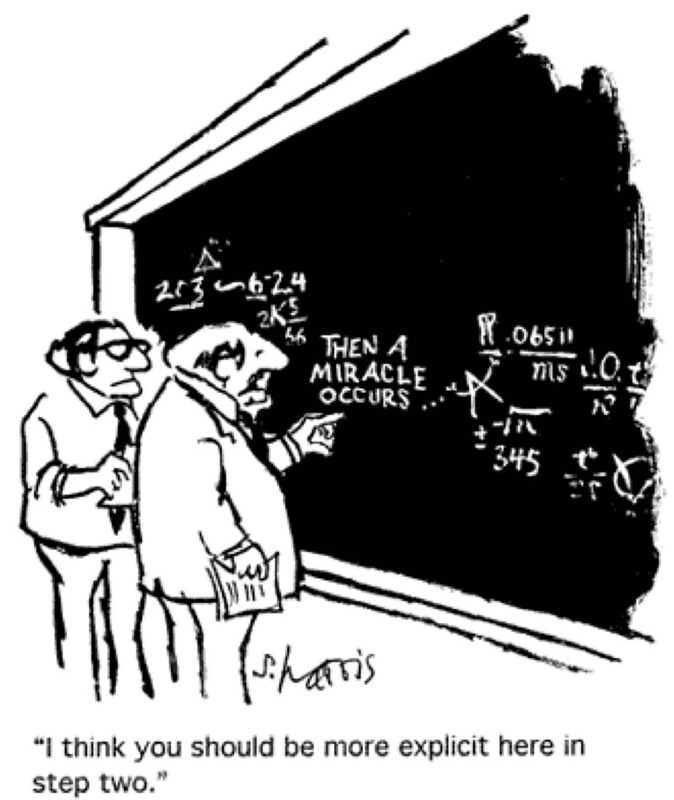
A summer of miracles has been scheduled

And then a miracle occurs.I'm posting this as a documentation of the moment we are in here in the depths of the COVID-19 coronavirus pandemic.

School districts have closed out the quarantine-crippled Spring 2020 semester and with it, an unprecedented school year.

Now comes decisions on what to do for the rapidly-approaching start of the 2020-2021 school year. Tax revenues have been decimated and school budgets stand to be slashed. But families are weary of quarantine and eager to get children back in schools. It turns out the economy of the nation cannot reopen unless children are back in schools.

But the pandemic continues, claiming over 1000 lives each day as of this writing. Packing bodies into close quarters on school campuses, where social distancing among school-age children is operationally impossible is a coronavirus's paradise.

Most district's are just now entering into deliberations on how to handle the beginning of the school year. My district hasn't announced the logistics, other than to confirm that the school year will start in accordance with the negotiated calendar date of August 13.

Full in-class face-to-face instruction lies at one extreme; full distance learning lies at the other. A hybrid model of physically-distanced small groups of students attending each class perhaps once a week is being considered, despite its minimal value as day-care.

Such a model would have the instructor deliver one in-class lesson per week while also providing four more days of distance learning, preferably asynchronous instruction. But what—exactly—to teach, and how? Across the entirety of a large, suburban unified school district?

That's what brings us to this. I see it as my district's call for miracle work to be done over the summer. Full disclosure: I do not work miracles, so I did not apply. I anticipate putting in many hours of uncompensated work over the summer to prepare curriculum on my own.

But if I were keen to collect $4000, all I would need to do is

• Attend 4-6 hours of pre-training
• 
Develop 45 physics lessons to be utilized within the first four months of the school year that
· provide background information and introduce new content to prepare students for in class or synchronous learning.
· 
build skills associated with the essential standards, allowing the teacher of record discretion on how to integrate the lessons with their distance learning environment.
· Also, these 45 lessons will include implementation recommendations, supplemental and supporting resources, formative and summative assessments.

For our nine high school district, there will be one physics practitioner responsible for the design of these 45 lessons. I wish that person well.
___

SIDE LETTER OF AGREEMENT (SLA) Between
SAN JUAN UNIFIED SCHOOL DISTRICT (District) and the
SAN JUAN TEACHERS ASSOCIATION (Association)

Summer 2020 Work to Prepare Lessons Aligned to Essential Standards 

Background
In any typical year, we may face challenges of getting all students to reach mastery of all standards. Given this unprecedented time, we believe that it will be even more challenging to cover all of the standards in 2020-2021 as we would during a typical school year. In an attempt to reduce stress and address this reality, while still trusting professionals and believing in professional autonomy, we have recently convened joint teams of practitioners and administrators to draft guidelines for ‘Essential Standards’ for each grade level and core academic content area. Within this work, essential standards represent the minimum a student must learn to reach higher levels of learning. In order for a standard to be identified as “essential” it would either be a power standard or building block standard that is necessary for students to master in order to be:
❖ successful later in the year
❖ successful in the next grade or course level
❖ successful across other domains or content areas

Intent
● To utilize the expertise of San Juan practitioners and support their colleagues by creating, developing and providing a bank of lessons that are accessible online so that in-person or synchronous learning can focus on differentiation, relationship building, assessing learning, etc.
○ The bank of lessons will be available for practitioners to supplement and support their focus on the essential standards guidelines.
○ These lessons may be used to help practitioners use alternative methods of instruction (for example flipping the classroom).

Agreement
Scope of work (Elementary):
The goal of each practitioner or team of practitioners is to curate content and create lessons to support the implementation of essential standards guidelines up to winter break.

Scope of work (Secondary):
The goal of each practitioner or team of practitioners is to curate content and create lessons to support the implementation of essential standards guidelines for the first semester.

Expected deliverables for essential standards include:
● A fully prepared unit of study ​which can be delivered in an asynchronous manner
○ Lesson plans housed in the San Juan Google drive (each practitioner/team will develop 45 lessons in total, by content and grade level, to be utilized within the first four months of the school year).
■ The focus of each lesson in a unit of study is to:
● provide background information, and introduce new
content to prepare students for in class or synchronous learning. (The in-class or synchronous learning is where the classroom teacher can differentiate for individual or small group practice, collaboration or extention of the concepts being taught.)
● build skills associated with the essential standards, allowing the teacher of record discretion on how to integrate the lessons with their distance learning environment.
○ Implementation recommendations
○ Supplemental and supporting resources
○ Formative and summative assessments

Practitioners selected will:
● participate in pre-training (4-6 hours in total, dates and times TBD)
○ Technology and platform integration
○ Review lesson exemplars/templates
○ Calibration of deliverables
● collaborate weekly with the district's professional learning support teams to ensure coordination of efforts and deliverables

Selection Assignments
Both parties value all subject matters that are taught in San Juan Unified and believe that a comprehensive education includes music, art, physical education, health, and electives. Unfortunately, during this crisis both funds and time are limited. The parties realize regrettably that the assignments below do not reflect all subject matter, courses and grade levels. These grades and subjects were identified because they align with the implementation of core content within the essential standards guidelines. As funding and time allows, other grade levels and content areas may be added in the future.

The parties agree that eighty-two (82) practitioners will be hired from the SJTA bargaining unit for the purpose of facilitating the implementation of Essential Standards Guidelines.

A. Elementary - Grade level and subject teams are set as follows:

a.
i. English Language Arts ( 2 practitioners per grade level K-5)
ii. Math (2 practitioners per grade level K-5)
iii. ELA and Math (2 practitioners from TK :1 for ELA and 1 for math)
iv. Social studies (3 practitioners- 1 per grade for grades 3, 4 and 5)
v. Science (3 practitioners - 1 per grade for grades 3, 4 and 5)
vi. ELD (2 practitioners supporting K-2 and 3-5)
vii. Special Education Support (2 practitioners supporting K-2 and 3-5)
viii. Dual Immersion (4 practitioners covering K-8)

B. Middle School - Grade level and subject teams are set as follows:

a. Grades 6:
i. English Language Arts (1 Practitioner)
ii. Math (2 Practitioners)
iii. Social Studies / History (1 Practitioner)
iv. Science (1 Practitioner)

b. Grade 7:
i. English Language Arts (1 Practitioner)
ii. Math (2 Practitioners)
iii. Social Studies / History (1 Practitioner)
iv. Science (1 Practitioner)

c. Grade 8:
i. English Language Arts (1 Practitioner)
ii. Math (2 Practitioners)
iii. Social Studies / History (1 Practitioner)
iv. Science (1 Practitioner)

C. High School

a. English:
i. Grade 9 - ELA (2 Practitioners)
ii. Grade 10 - ELA (2 Practitioners)
iii. Grade 11 - ELA (2 Practitioners)

b. Math:
i. Integrated Math 1 (2 Practitioners)
ii. Integrated Math 2 (2 Practitioners)
iii. Integrated Math 3 (2 Practitioners)

c. Social Studies / History
i. World History (2 Practitioners)
ii. US History (2 Practitioners)
iii. US Government (1 Practitioner)
iv. Economics (1 Practitioner)

d. Science:
i. Biology (2 Practitioners)
ii. Chemistry (2 Practitioners)
iii. Physics (1 Practitioner)

e. World Language:
i. Spanish1 and 2 (2 Practitioners)
ii. French 1 and 2 (2 Practitioners)

Specific Responsibilities
Create and curate resources for essential standards guidelines for instructional staff:
● A fully prepared unit of study ​which can be delivered in an asynchronous manner
○ Lesson plans housed in the San Juan Google drive ○ Implementation recommendations
○ Supplemental and supporting resources
○ Formative and summative assessments

Term
The term shall be June - July 2020.

The deliverables noted above are due based on the timeline below:
o Fully prepared units of study for August - September are due no later than July 22, 2020
o Fully prepared units of study for October - December are due no later than July 31, 2020

Eligibility
● Be a credentialed teacher with permanent status.
● Must have ‘met’ standards in two most recent evaluations.
● Understanding of unit and assessment design aligned to standards.
● Ability to collaborate with colleagues and work effectively in a team environment.
● Demonstrate exemplary teaching ability, as indicated by, among other things, effective
interpersonal communication skills, subject matter knowledge, and mastery of a range of
teaching strategies necessary to meet the needs of pupils in different contexts.
● Current school year assignment (2019-20) involves providing direct instruction to
students (​preferred, not required​).
A member interested in being considered for the Essential Standards Guidelines Summer 2020
work shall:
● Submit a completed letter of interest to ​summerschool@sanjuan.edu​ by Friday June 12, 2020 which shall include:
o Relevant experience
o A list of references including at least one administrator and one colleague
o A sample distance learning lesson that has been taught sometime between March 13, 2020 and June 5, 2020.

Compensation
● $4,000.00 stipend to be paid no later than September 30, 2020 
This SLA will sunset on July 31, 2020.

Wednesday, May 27, 2020

The Gendered Mind—another myth that will not die

I am much more mellow now than I used to be. Sure I'm willing to fight when I think a fight is called for. But I think I was much more of an intellectual pugilist when I was, say, age 16 to 21.

While at The University of Michigan, I found a place for that energy. In a response to the then-new Moral Majority, a statewide grass-roots response was organized: The Voice of Reason (later to become a national organization called Americans for Religious Liberty—not a name I was excited about).

Since my interests and aptitudes lay in science, my "beat" within the organization gravitated toward the creationism debate. Among my first credited by-lines was the article I wrote for the campus publication, Consider. It was a simple, single-sheet (11"x17" brochure folded to 8.5" x 11") that featured one-page essays on the inside facing pages. A topic was identified, and authors were found for pro and con pieces. But I digress.

I was heartened by the the Edwards v. Aguillard Supreme Court decision that was argued months into my first year of teaching and handed down a few months later. It wasn't unanimous, but it was 7-2. I naïvely thought the issue was settled. But of course, it wasn't.

Years later in Pennsylvania, creationism newer iteration, "intelligent design" had to be put down by the courts in The Dover Case (Kitzmiller v. Dover). You would be naïve to imagine that that will be the end of the debate over maintaining the integrity of biology instruction in public schools. Judicial precedent doesn't seem to stick on this debate.

When I authored my master's thesis on gender equity in physics instruction, I came across the notion of the gendered mind. Boys were supposedly better with spatial geometry and mathematics while girls were better with language and communication. But the research supporting these "common sense" notions was weak. It seemed to be born from age-old gender bias, and the differences found by researchers were tenuous at best.

But they floated effortlessly in the updraft of societal and cultural gender norms. The supposed science presented a story that was "too good to be verified." And so it persists. To this day, it persists.

All of that to introduce a story I came across on Audm. The abridged title was "Of Two Minds".

The Discredited Science Behind the Rise of Single-Sex Public Schools

There are many important take-aways in this thorough investigation. One of them is that as an instructor, there's a good chance you will be subjected to these notions in a school or district-sanctioned in-service professional development session. You will be frowning in disapproval, but colleagues will be nodding in agreement. And it has to be legit, right? It was approved by administrators and district personnel.

It will fall upon you to rise up and put a stop to it. The cavalry isn't coming. You—and it may be you, alone—can shut this nonsense down before it goes any further. Arm yourself with articles like this so that you will have the strength that comes from knowing. And do the right thing.

Sunday, April 19, 2020

The Grade Inflation Pandemic of 2020, Part 2: The Solution

Call me Physics Oprah. Because everyone on my roster gets an A this semester. Everyone.

If you didn't read Part 1 (below), you won't realize why I have adopted this grading solution.

After you read Part 1, you may not like this solution. I do not like this solution. But Part 1 details how all the teachers in the San Juan Unified School District were needlessly and deliberately thrown into a no-win scenario. And there are no good solutions to a no-win scenario.

The object lesson provided by the highest-paid district leadership and the dues-collecting union officials couldn't be clearer:
Angry, misguided, vocal minorities operating on incorrect information are to be respected and appeased. 
You could start with a well-reasoned, correct and deliberative position. But abandon it without a fight when any opposition is mounted. Ill-informed? Misguided? It doesn't matter. It's opposition, so capitulation is the expedient response.

I don't like it. It's a policy that comforts the comfortable while afflicting the afflicted. But it wasn't my call. I argued against it to no avail.

But the call has been made and I must roll with it.

It's clear that none of the decision-makers have ever been classroom teachers. If they had, they would realize that they were asking teachers to keep a double set of gradebooks: one set for students happy with the default C/NC and a second for students who were petitioning for letter grades. My god.

I am sure that after throwing teachers under the bus, district and union leadership imagined energetic and innovative teachers would find some way to thread the eyeless needle and develop a second set of online/distance learning policies that would keep students fully engaged with powerful teaching and learning.

And they may be onto something. A colleague compared his Unit 5 and Unit 6 test scores. The Unit 5 test was administered in a secure classroom setting. The average score was under 40%. His Unit 6 test administered online. The average was over 100%. He had clearly made a successful transition to online learning and his students were shining in this new environment. Only a hardened cynic would so much as suggest that elevated Unit 6 scores may have been influenced by cheating of any kind.

So yes, I'm giving all my students A's. Because I have no idea what each of them is up against, but I do know exactly what I'm up against. I will share the news of this obvious grade inflation as far and wide as I can. Admissions officers at colleges and universities need to know: I'm giving all my students A's for Spring 2020. And I'm not the only one. Check out this news from San Francisco. The angry, misguided petitioners' victory is entirely pyrrhic.

I'm giving all my students A's. Because when everyone gets an A, no one gets and A.

But doesn't that hurt students who could have distinguished themselves from their classmates with a performance-based A supported by documentary evidence? Yes it does. But in Spring 2020, we do not possess the means to assemble that performance-based documentary evidence.

That's why Credit / No Credit was the sole correct solution to the circumstances. Those are the only honest grades that can be earned this semester. But the district abandoned honesty. And so will I.

Do colleges and universities need to populate their freshman classes with appropriately capable students? Yes they do. But the Spring 2020 grades in your course (and many courses across the country) may not be an honest reflection of students' capabilities. True. Somehow, colleges will need to overcome The Grade Inflation Pandemic of 2020. I have confidence in their abilities to do so.

Primary source documentation available in the comments.

The Grade Inflation Pandemic of 2020, Part 1: The Problem

As the coronavirus pandemic began to take off, schools around the world began to close. Initially it was thought that a month-long shutdown might suffice. Student were told to take their papers and books home on our last day of school.

After a few weeks of virtual office hours paired with opportunities for students to read, review, and enrich, it was decided that more direct instruction was called for. If assignments are to be assigned and so forth, there must be a mechanism for determining grades.

The in-class lesson plans for the remainder of the year were rendered useless. Teachers had to suddenly master online distance teaching tools and techniques that most of them never had any interest in using.  "Have you activated your Google Classroom? Are you ready to Zoom with your classes? Are you hip to Flip Grid? What about Pear Deck? Do you have an Edulastic account? Have you tried Screencastify or do you prefer Screencast-omatic?" Every company with online solutions flooded teacher inboxes with free trials and promises of online instruction efficacy.

There was an expectation that teachers would flip a switch and put their in-class instruction online. Of course they cannot. And college prep / Advanced Placement lab science? Not a chance.

Even if they could, student families were in various states of preparedness. In any school community, there will be a variety of Internet accessibility. And on a larger scope, there is now a variety of economic stability/parental employment status. And a variety of direct COVID-19 impact.

Practicable instruments to asses individual student performance online do not exist. Period. Full stop. If you believe students can be honestly assessed online, it's because you are old. Well over 20. Anyone under 30 knows secure online assessment doesn't exist. (If you think you know such an online tool, type its name into your search engine and add the word "cheat" and see what happens. I'll wait.)

Given the variety of teacher preparedness and student circumstances, it was decided that the most equitable solution would be to switch from letter grades to pass/fail (credit/no credit). The decision was agreed to and communicated to the district community of teachers, parents, and students.

But some families chafed. Rather than appreciate the extraordinary circumstances and understand that everyone was affected and that colleges and universities would take this into account when evaluating applicants, they took a different tack. They behaved as if their child was going to be saddled with a D– on their permanent record (transcript) and no elite, top-tier post-secondary school would even consider them for admission. College admissions officers would gaze upon the Spring 2020 grade and wonder why it was what it was. Colleges were assumed to be completely unaware of the pandemic.

My own Next Door app feed, usually filled with tales of found and lost Chihuahuas and porch piracy now featured an angry petition to Stop the madness of Credit/No Credit being imposed on district students. Petitioners asserted that the policy would cripple the district's best and brightest students, ruining them for college admissions and beyond. The email addresses of school board members were shared and a boilerplate angry missive was suggested.

They demanded that individual students be able to opt out of Credit / No Credit into letter grades if they so desired.

When I caught wind of this movement, I did what I could to stand in opposition, as you can see in the previous post. The angry petitioners were arguing for a policy that would comfort the comfortable while afflicting the afflicted.

Within hours of my action, the district announced it would acquiesce completely and without modification to the petitioners wishes. Word for word capitulation. My principal instructed faculty to direct their misgivings to their union (San Juan Teachers Association—SJTA) representatives.

The adoptee policy allows students to opt into letter grades, but they can change their mind on that no later than the end of the school year. So if the grade is looking good to them at the end of the semester, they can lock it in. If they don't like what they see, they can fall back to C/NC. Perfect!

The union agreed to this complete and total cave-in, 100% and without any pushback whatsoever. But they attempted to gaslight their dues-paying membership: in an email to be shared with all bargaining unit members, we were told of the pitched battle SJTA mounted.

"We did our best to negotiate, and we got what we could.  Most of our neighboring districts mandated teachers to give letter grades A—F.  Our union was able to reach the compromise of C/NC with the petition piece."

Here's what the Next Door petitioners were petitioning for.

'Instead of the misguided "Credit/Co Credit" policy, the district should allow ALL students the option to choose either "Credit/No Credit" OR letter grades."

Re-read the union's statement—they never said that our district was demanding X and SJTA battled them back to Y. In reality, the angry petitioners and their school board enablers demanded Y, and SJTA agreed to Y. No negotiation; no compromise.

UPDATE: I had a conversation with the president of the SJTA. It seems that the union had very little leverage in this decision. The school board and superintendent went forward with their capitulation and there really wasn't much the union could do about it. And the petitioners' demands were in line with CDE broad guidelines for what would be permissible. Still though, the objectively correct response to the pandemic closures was to adopt Credit/No Credit. And to then stand firm in that position. My district opted to appease the angry petitioners. That decision, expedient in the short term, will not age well.

This is the context necessary to understand my solution as laid out in Part 2.

Friday, April 17, 2020

Maintaining resolve on Credit / No Credit

[My district, San Juan Unified in suburban Sacramento, decided to adopt Credit / No Credit grading for Spring 2020. But they are facing blowback from a certain element in the community. So I wrote this and sent it to the decision-makers. How is your institution handling Spring 2020 grades? Let me know in the comments.]

The feed on my Next Door app has turned from posts about lost and found Chihuahuas to angry missives about the San Juan Unified School District’s decision to adopt Credit / No Credit grades for the pandemic shutdown second semester: Spring 2020.

I am grateful that I can count on my district and especially my association to maintain their resolve on this important decision. Because it is the correct decision.

During shutdown, there is no way to assess individual student knowledge or capabilities. In functional school, in-class tests carefully designed by classroom instructors could be administered and proctored by those teachers to ensure accurate and secure results. There is no practicable way to do that online. None. Everyone under 20 understands that perfectly well. People over 30 have diminishing understanding of that, which decreases with increasing age.

That reality, alone, is enough to scuttle any hope of being able to produce letter grades for students during shutdown. But it gets worse.

As of March 13, 2020, instructors such as myself planned to make it to retirement without ever having constructed or administered an online version of their course. I teach college prep and Advanced Placement physics lab courses. No one imagines teaching or learning such a subject in an online environment. No one.

Sophisticated and specialized demonstration equipment remains locked away in access-restricted classrooms. Sophisticated and specialized laboratory apparatus for hands-on student lab group collaborative experiment activities is similarly behind lock and key. Neither demonstrations nor labs can be conducted or assessed during shutdown. And these are the core of my courses.

As of March 16, 2020, I have been bombarded with invitations and recommendations to engage in Google Classroom, Pear Deck, Edulastic, Flip Grid, Zoom, etc., not to mention online science resources. The flood of online platforms, tools, and resources is overwhelming and I am being asked to build an airplane while it is in flight. I know nothing of these things and never planned on using any of them. They do not pertain to the job I was hired to do—a job that I have been recognized for doing exceptionally well.

Could I assign copious reading, video watching, and essay writing for the many, many students on my roster? Yes. But those assignments would be going into homes with an untold variety of circumstances: high and low bandwidth, high and low economic anxiety, high an low physical space, and myriad environments—some more conducive to learning than others. At best, getting all those lengthy assignments back would require time beyond what’s available to assess.

Those who insist that letter grades be awarded during this time appreciate and understand none of this. They are worried that a Credit/No Credit grades awarded in Spring 2020 will disqualify students from admission to top-tier elite post-secondary institutions. They imagine that none of these institutions will be aware of the global pandemic that shut down the world in Spring 2020. They worry that students from districts who are awarding letter grades in Spring 2020 will have a competitive advantage over SJUSD students in college admissions. None of this is true.

In short, it is a small but vocal band of affluent families who are arguing for letter grades that cannot be determined honestly in Spring 2020. It is an argument for a policy that comforts the comfortable and afflicts the afflicted.

I appreciate my district and my association rejecting such a policy.

Dean Baird
Rio Americano High School Physics
Presidential Awardee for Excellence in Mathematics and Science Teaching
American Association of Physics Teachers Fellow

Monday, March 23, 2020

Online Resources for Teaching Physics

Howdy all,

First, I'd like to thank my friend and colleague, Dean Baird, for inviting me to be a guest blogger here at The Blog of Phyz. Briefly, I've been teaching high school and college-level physics since 1998, and in that time I've seen a lot—but nothing like what we're all dealing with now.

In addition to my teaching duties, I am the secretary and webmaster of Physics Northwest (group of physics teachers in the suburbs north and west of Chicago), and we've worked with our own teacher network as well as the TAP-L email list to assemble a long list of available online resources for teaching physics. This list of information has been posted to the front page of the Physics Northwest website at https://sites.google.com/site/physicsnorthwest/

Update 3/28/20: Here's a new and improved Google Sheet version of Matt's collection that we've been working on: Physics Distance Learning Resources. Consider it Version 1.0, and load us up with links we missed down in the comments. Remember: Google Sheets can have tabs. This sheet has four tabs (so far). Check them all out.

I apologize that the list isn't formatted and organized yet, as I've been busy tackling my own struggles with online teaching this past week, but now that I'm on spring break I'll have some time to tweak the list (so stay tuned). Any suggestions for additions and/or edits are welcome.

Take care, folks. It's a rough time for the lot of us, but in times like this I like to remind myself of the old Marine Corps motto: Improvise, Adapt, Overcome.

Cheers - Matt Lowry
[Matt has been my presentation partner for "Skepticism in the Classroom" workshops at AAPT and NSTA Meetings. To see our first collaboration, check this out! And if you click the Physics Northwest link above, you will see a collection of great physics teachers, some of whom you may know from Twitter or elsewhere. Matt's in the fourth quadrant in the fashionable "Keep Calm" T. –Dean]

Thursday, March 19, 2020

My path for instruction during coronavirus...

might be different from yours. And chances are, yours will be more robust than mine.

The physics instructor (and high school instructor) social media sphere is rife with tales of how best to lead online courses complete with live video lectures. A tidal wave of software tool recommendations have flooded in. Solutions that were previously subscription-based are suddenly free. Industrious instructors are assembling indexes of quality resources. Online instructional veterans are posting pro tips for the flood of novices.

All of this is appropriate, natural, and good. And I am completely overwhelmed.

Whatever path colleagues take into the uncharted waters of this coronavirus transmission break is correct as far as I am concerned. There is no One True Path for this. Different districts have communicated different expectations. Different teachers have different students and different temperaments and different resources and different abilities. One size cannot fit all.

My district has directed instructors to make themselves available to students via virtual office hours from 8:30-10:30am and 12:30-2:30pm each school day. No new assignments are to be given. No student work is to be graded. I am in a suburban unified school district (about 38,000 students at 50 sites). The district is not 1:1 (one computer for each student). We were duly warned that giving assignments or grading work online would likely constitute a violation of the Individuals with Disabilities Education Act.

In the face of my trepidation, I pulled back for a little perspective.

When we left school last Friday, this break was going to be shockingly long: no classes for a month. Administrators would continue to report to their respective sites in the interim. Classroom access would be allowed for instructors (6am-6pm). Less than a week later, our sites are now abandoned shut—alarms are armed 24/7. Counties are on shelter-in-place or full lockdown. The governor does not foresee schools reopening this academic year. This is objectively a full stop.

Students have been thrown into an unprecedented spiral of lost activities (sports and other extracurriculars, prom, graduation). Their parents may be newly unemployed. Families with lost incomes wondering how they will obtain groceries amid the hoarding. They may have loved ones suffering from COVID-19, and they should be doing what they can to avoid being a vector for the contagion.

So how pressing is the physics curriculum to my students? Answers will vary. But I think it's safe to presume that it's less than it was a week ago. Substantially less.

What to do? I don't know. Here's what I've settled on.

I already have a decent "static" online physics curriculum presence at phyz.org. Much to read, many worksheets to do. Students do have their textbooks. And the Internet bursts with resources. I am going to encourage my students to learn the remainder of the year's curriculum. To learn it as if they were going to have their final exam at the end of the school year. My final exams focus on the big, important ideas that should be internalized by the end of the semester.

As is always the case, learning physics is a conscious choice. Some students choose to learn physics without ever having enrolled in the course. Many students enroll in the course but never choose to learn physics. It has always been thus.

I will be in contact with my students through the school's SIS mass email feature to provide direction for how they can engage in learning. We will not have all the labs, activities, and demonstrations that face-to-face classroom instruction would afford. The learning may not be as robust. But the big ideas and fundamental principles should get through.

So that's my path. Providing some resources and guidance, with the student goal of being able to perform well on the semester final exam. With that vision, I feel like I can move forward.

Thursday, February 20, 2020

Anxiety among high school students

TL;DR: Today's high school students suffer anxiety brought on, in part, by always being connected on their phones and by a perpetual need to know what their grade-in-progress is right now. I actively remediate against both of these things, but my methods are frowned upon.

We tend to imagine ourselves the heroes of the movies we live our lives in. And those of us with blogs rarely hesitate to trumpet our own heroism. (That includes virtually everyone on Twitter, the microblogging site where virtue signaling is like oxygen.) As a publisher of a blog and someone with a Twitter account, I am in no position to hold myself above the crowd.

The theme of a recent faculty in-service session for the faculty of my school was anxiety among high school students. Counselors hoped to raise awareness and broadcast availability of services.

One potent source of anxiety was that students were constantly on their phones, connected to social networks that functioned as stock markets, chronicling the ups and downs of their individual social status.

I bit my tongue. I had a suggestion, but it would not have been welcome in this setting. This setting was to paint the picture of how bad things are for today's high school students. The aim was for recognition and accommodation. The problem was described as too pervasive and universal for remediation or solution.

Another stressor was the constant obsession with academic grades. Students and parents are in a state of perpetually refreshing their online grade book page to see if the latest assignment's score raised or lowered their grade-in-progress.

I bit my tongue again. Had the biting been literal instead of figurative, there would have been blood.

In my classroom, I do not ask students to refrain from phone use. I physically separate students from their phones as a matter of classroom policy. Violators are assigned Saturday School. That is my in-class, temporary remedial effort to alleviate phone-based anxiety during instruction.

Students hate it. My enrollments have suffered. Colleagues won't do it. Many teachers never want to be cast as the bad guy in their own classroom. So they beg/plead/bargain with students, who deploy the full measure of their genius to stealthily maintain their ongoing phone activities while instruction plays out around them. I cannot change my colleagues, but I also cannot allow my classroom to be another phone zone. I have a finite number of minutes to teach a difficult topic, so I'll don the black hat.

When I began teaching in 1986, we tendered grades four times a year. That evolved to six times. That, in turn, evolved into eight. Every increase in frequency was heralded as a solution that would lead to better student performance. In my personal experience, the actual outcome has been the diametric opposite.

With the advent of online student information systems (SIS), there is an expectation of daily grades-in-progress updates.

But I don't use my district's online grade book. I do not post daily updates to the SIS. I post updates at the district-mandated grading interims, eight times a year. (I prefer Excel over the online grade book; I can bend Excel to my will, and I like math. To me, the online grade book is a horrendous kludge.)

So when we learned that a source of student anxiety was their constant need for grade updates, I might have raised a hand and described how I didn't play into that practice. But doing so would have cast me as the jerk. Counselors and parents, too, want up-to-the-minute grades-in-progress. I make my students wait a month (a month!) between grade updates. What kind of luddite barbarian am I?

Of course, there are some who would argue that I'm actually precipitating anxiety through my solutions. While separated from their phones during instruction in my class, students might not be able to think about anything except when they will be reunited with their phones. And two weeks into that one month eternity between grading updates, students could be wracked with anxiety over what their grade has progressed to.

If this is the case, it's a Kobiyashi Maru. I have chosen one losing path while others choose another.

Saturday, September 21, 2019

Where we are with phones in the classroom

Students being distracted by phones at school began registering in the early 2010s. By the late 2010s, the problem was full-blown.

Teachers and administrators were somewhat flat-footed in their response. They didn't understand the depth of the phone addiction epidemic because they hadn't ever suffered from it. That was a mistake.

Amid the generational gap in understanding, teachers were overrun. Many wearied of pleading and admonishing and bribing and punishing students to keep them from using their phones in class. 

As in any profession, teachers populate a spectrum of professionalism. And at one end of the spectrum, some teachers were delighted to discover that they could produce a silent classroom of happy students by letting them "phone out" (zone out on their phones). Teacher effort required: zero. A perfect pacifier. 

There were also the "treat-em-like-adults" optimists who felt that given free anytime access, 14 year-olds in class would exercise  only use their phones if they truly needed to. They were shocked by the ubiquity of that need. 

There were also jerks like me. I never harbored any patience for unauthorized phone use in class. And my authorizations were few and far between. Very few. The "No Phone Zone" policy is displayed and repeatedly announced. But there were always students who were undeterred. 

Those students were accustomed to teachers begging and pleading. They'd often make an attempt at discretion by hiding their phone behind books or a backpack on the desk. They were in complete disbelief when I assigned them Saturday school upon their very first phone infraction. But that tended to keep subsequent infractions in check to some extent.

Two years ago I cleared out part of my room to make space for a backpack cubbies. Thirty-two: one for each seating location in the classroom. And I authored an accompanying limerick:

The phone goes into the pack
The pack goes into the rack
Kindly observe
That the parking's reserved
In an hour you'll get it all back

The backpack rack is reasonably effective. But phone addiction is strong among teenagers. And getting stronger. Some keep their phone in a pocket rather than surrendering it to the pack which will lie feet away from them for the duration of the period. And, as mentioned previously, my zero tolerance casts me as an intolerant jerk who just doesn't "get it". Some colleagues would suggest I'm not meeting the students where they are.

In 2019, we have sporadic tales of schoolwide attempts to minimize phone distraction in class. My own school flirted with Pocket Points. It required no expenditure and was simple to defeat. Other schools are trying magnetically locked phone bags. The logistics seem cumbersome and, again, teenagers know how to defeat these measures. The addiction is strong.


There is no research that I'm aware of that touts the benefits of student phone use in class. Research to the contrary doesn't seem hard to find. For example:


France has banned phones from classrooms. I don't foresee this happening anywhere in the US. Because
1. many parents delight in having immediate access to their children throughout the school day.
2. classroom teachers, many of whom have all but surrendered on the phone issue, strive to find positive uses for the phones they know will be up and running during class.
3. administrators fall behind in assigning phone-violation discipline as it is. That only stands to get worse with an all-out ban

I will continue to be a No Phone Zone jerk in my own classroom, allowing phone-friendly colleagues to appear "chill" in comparison. Some will argue that students won't be able to concentrate, anxious from having been separated from their phones.

I plan to retire in 2023.

Sunday, September 15, 2019

The threat of gun violence at schools

When I began teaching in 1986, all the doors on my school's sprawling 64-acre campus opened via doorknobs. And those doorknobs locked from the outside. All classrooms open to the great outdoors. We had emergency procedures for fires and earthquakes.

Since Columbine, the doors were retrofitted with exterior pull handles and interior crash bars. The doors can be locked from the inside. Emergency procedures of lockdown and shelter-in-place were added.

In recent years, a predictable pattern has emerged. Whenever an unscheduled lockdown or shelter-in-place occurs (and they are rare), the principal will get messages from concerned parents worried that the school had not taken the threat seriously enough. The verdict of disappointment will be shared, and further drills are scheduled.

We were recently placed on lockdown during our half-hour lunch period. I hustled nearby students (none of whom I knew) into my classroom and locked the room down. I was impressed how quickly the bustling outdoor lunch crowd of 1900+ students cleared into classrooms. The lockdown was eventually downgraded to a shelter in place. An administrator checked my classroom to provide an update.

(We later learned that a proximate shooting threat to a nearby school was made on social media. Nothing came of it other than that the recently expelled student from that school who made the threat was taken into custody in another part of town.)

As far as I could tell, the whole episode went to plan. My room of strangers behaved well and emerged unscathed.

But dissatisfaction was phoned in in the aftermath, so staff underwent additional training, and a followup drill was scheduled.

There is an assumption and expectation that schools (including open-air, indefensible campuses) stand ready to protect students from any attack at any time. No such expectation existed in 1986.

In any case, one thing faculty were warned against was any discussion that would do anything to diminish the fear of a potential mass shooting at the school. Stating the real statistics on mass shootings at school was cast as a no-no.

Don't get me wrong. I believe that the unfettered access to military-grade assault weaponry designed specifically to kill humans on the battlefield is a problem. Mass shootings at schools are a problem. But I'm not keen to put a spin on facts and reality. I listened to this just days after our emergency emergency training session.

On the Media: How to Report on Gun Violence in America


I'm fairly confident that every lockdown incident on campus, no matter how well executed by students and staff, will result in complaints of perceived shortcomings sent in by people who were not present during the incident. This will result in further emergency emergency training sessions and drills.

Tuesday, December 26, 2017

Making engagement visual

At semester's end, it's possible to look back and see how student engagement in the course manifested itself into semester grades.

Students who perform well on tests and labs naturally percolate to the top. But those who don't excel in those objective measures have alternate routes to good grades in my courses.

During the semester, "extra credit" (credit toward the final: CTF) is awarded in dribs and drabs for various tasks and in-class competitions. Completing paperwork associated with the beginning of the school year and team performance in our egg-toss competition are typical first-semester sources. The credit is accumulated through the semester, but only becomes active as an addition to the final exam score. Some teachers add in extra credit as it comes in. That leads to disappointment when final exam scores are low. Adding it to final exam scores at the end of the semester leads to delight similar to finding money under the cushions of the sofa/couch/davenport.

More importantly in my Physics (PHY) and Conceptual Physics (CP) courses, students can earn back points lost on unit tests. The process is called Test Correction Journal. Students write "journal entries" for each item they missed on a unit test and reflect on why they were drawn to a wrong answer over the right answer. Later, a quiz is given consisting of questions from the original test. If they get 10 out 10 on the quiz, they earn back half the points they missed on the test. If they 9/10, they get 90% of half the points they missed, etc.. A 60 can turn into an 80 and 40 into a 70. A 90 can turn into a 95. The more help you need, the more help TCJs provide.

Neither CTF nor TCJs depend on rapid assimilation of course content. But they do depend largely on engagement. Sometimes students who miss many items on a unit test cannot finish the journaling process that we begin during class time. They need to come it at lunch or after school during an approximately two-week window to finish the journal. Only students with completed journals are allowed to take the quiz that will earn their missed test points back.

Students who disengage from TCJs create and expand a gap between themselves and those who are engaged. My engaged students earn only As and Bs. But Cs, Ds, and Fs are given every semester, as many students elect to disengage.

The listings below are actual student data. Each is a period, sorted by points earned. I used Excel's conditional formatting to color the cells in a spectrum from top-score green to bottom-score red, with yellow in between. The next column colors CTF points on a same basis (green good; red bad). Then (for PHY classes), it's the TCJ column with the same color scheme. The last column shows the final exam raw score out of 50. The top number in each column show the maximum value possible.


The pattern is fairly consistent, with anomalies here and there. Nothing to shatter the Earth here. I just wanted to see how well the seemingly nebulous "engagement" tracks to overall class performance. Teachers know this pattern is really the only one that's possible. Students don't always have an intuitive understanding of it. Some will see the evidence and reject it nonetheless.

Those students believe it's possible to get a top score with minimal engagement. It's mathematically possible. It just never happens. They may also fear that investing in full engagement will not be rewarded in a top score. Yet we don't find a red Points value followed by green CTF and TCJ columns. That's actually much less mathematically possible, given what TCJs do.

Sunday, September 20, 2015

What I did for Back to School Night #30

We started the school year (with students) on August 13th this year. That's a record early start date. Who remembers when school didn't begin until after Labor Day. Such places still exist. Just not where I teach.

Our Back-to-School Night was September 9th. For the past many years, I eschewed any discussion of policies for the 10-minute talk to parents. Instead, I presented a shortened version of the presentation I give in my Physics, AP Physics 1, and AP Physics 2 courses: "Physics Begins With an M". It's good stuff. And it would often generate at least one spontaneous round of applause at the 10-minute mark.

This time around, I spoke to the parents about the content of the course, how grades are determined, and the importance of engagement. The talk was not devoid of humor, but it was certainly heavier than my previous presentation.

I also upped the page-count of the handout I give to parents at the session. The hope is that the handout I distribute to parents who come in tells them everything they could want to know. That takes the pressure off the 10-minute session we have together. That said, I never open the floor to parent questions. Time is short, and that tactic has a great potential for failure.

Here's the handout I provide.

Back to School Night Parent Information

I also give them this:

How Not to Get Stuck on Physics Homework / How to Succeed in Physics.

And yes, my very first Back to School Night was in September of 1986. Ronald Reagan was President and California Governor George Deukmejian had a daughter at my school. He was at that Back to School Night, too. So this edition of BTSN was my 30th.

Dipping a toe into Schoology

Back in the late 1990s, I was keen to establish a presence on the nascent World Wide Web. I created pages with Adobe's PageMill in hopes of creating in a WYSIWYG environment rather than get bogged down in the intricacies of HyperText Markup Language (HTML).

By 2000, I was creating and posting Portable Document Format (PDF) files of my curriculum materials. That process is intertwined with meeting and befriending Paul G. Hewitt. It was in the early 2000s that I registered the phyz.org domain name. In 2006, I started The Blog of Phyz.

In the late 2000s, my school district began providing a website generation service (SchoolWorld). I already had a relative "palace" on the web. By comparison, the district's service allowed teachers to create quaint cottages. I wasn't interested.

The district has discontinued its relationship with SchoolWorld in favor of a new relationship with SchoolWires. It also has an enterprise account with Schoology.

I'm exploring the utility and capabilities of Schoology. I use it primarily as an organizational tool for the curriculum in my courses. It seems useful in that regard. But nothing's as useful as the palace I've built at phyz.org.

One bright spot is the fact that tests created with ExamView can be exported to Blackboard format. Tests in Blackboard format can be imported by Schoology at online tests. Schoology can be configured in terms of test administration and the results are posted in class roster lists. Pretty slick! (It would be nice if ExamView showed any signs of life since 2012.}

In a way, it appears the logistics of Schoology make it possible to violate copyright law without interference or consequence. Only students and parents of students enrolled in courses can see the Schoology pages (and links and materials) associated with the course. So the violations are small-scale, I suppose.

Anyway, we'll see how it all goes. 

We could be evolving from an era of world-wide curriculum sharing on the web to closing back in ourselves. We shall see.

Monday, August 10, 2015

Professional development: Is it effective?

Trigger warning: if you are at all allergic to snark, you are advised to avoid this post.

It's that time of year, colleagues. You're rested up from that "summer off". [Please note: "Summer" is defined as the eight weeks between mid-June and mid-August, and "off" means you weren't teaching your subject in your classroom.] What better time to suck the life out of you with school-wide (if not district-wide) professional development (PD)?

According to thorough research collected by physics teaching superstar and Einstein Fellow, Marc "Zeke" Kossover, it turns out your professional development training may, in fact, be effective. But chances are that it's not.
A study of 25 professional development programs for math and science teachers in 14 states showed positive student outcomes if three conditions were met.
1. The programs focused on content in mathematics and science.

Honestly, you can probably stop right there. Chances are that the the PD you're engaging in is not focused on math or science. But if it is, feel free to continue.

2. The programs included on-site follow up in classrooms.

3. The teacher contact time reached at least 50 hours.

If the PD you're beginning this week meets all those conditions, please post a comment! To me, such PD is a unicorn: I know what it's supposed to look like, but I've never seen one in person.

In other news, I am beginning my 30th year of teaching this week.

Friday, February 14, 2014

Doing AP science wrong

I've taught AP Physics B since 1986. The course I taught was always intended to be an excellent advanced high school physics course that would compare as favorably as possible to an introductory college physics course. Engaging demonstrations and robust lab work was always important. But in the end, students needed to be prepared for the College Board's Advanced Placement Physics B Examination, administered each May.

From 1986 to 1997, we ran it as a first year course. But it was supposed to be a second year course, and in 1998, we brought our course into alignment with College Board expectations.

In recent years, sign-ups for AP Physics B dwindled at my school. Not so for AP Biology. Nor for AP Chemistry (which is a harder test than AP Physics B, as far as I'm concerned). Last year we introduced AP Environmental Science. It blossomed from one section last year to two this year. Impressive growth. While AP Bio and AP Chem held there ground, AP Physics bit the proverbial dust. Enrollment for 2014 did not merit a single section.

It was hard to observe the demise without concluding that the instructor of the course (that would be me) was doing something wrong. Data provided by the school's administration today sheds light on the subject.

In 2013, I had 25 students in AP Physics B. Only 21 sat for the exam, an unusually low test rate for me. Still though, while 16 of my students earned an A or B in my class, 16 also earned a 5 or a 4 on the exam. Six of the 21 AP Physics B examinees earned 5s. All my examinees passed with a 3 or better. I am rightfully very proud of all of them.

[sanctimony]
What I didn't know until today was that my raw number of 16 4s and 5s represented better top-tier performance than was had in any other AP science course at my school (including one with over double my enrollment). Or that my six 5s outnumbered the 5s from all our other AP sciences combined.

I also didn't know that my rate of classroom grades of A and B (64%) was—by far—the lowest rate, as was my A rate (under 50%).
[/sanctimony]

AP and honors courses enjoy weighted grading in my district, so an A gets you a grade point of 5, a B a 4, and a C a 3. Where I grew up, a GPA of 4.0 was the mark of academic perfection. My students routinely have GPAs well above 4.2. Students hoping for admission to elite post-secondary institutions are keen to fly their GPAs into the stratosphere. Such students try to enroll in as many APs as possible. But with so many demands on their time (and many are in our nationally-recognized band program), meeting the academic rigor of an AP science course can be challenging.

The story of my AP Physics B's demise can be found in the data that follows. To me, the tale jumps right off the page. If it doesn't to you, interpret that as me overreacting; making a mountain out of a molehill.

The diminishing enrollment in my course amid the flourishing enrollments of my colleague's courses does suggest that someone is doing AP science wrong.

Here's the data:


So...

In AP Physics B, there were 11 As and 6 5s. There was insufficient enrollment to run the course in 2014.

In non-physics AP sciences, there were 82 As and 3 5s. Enrollments in these courses increased in 2014.

A riddle wrapped in a mystery inside an enigma? I think not.

UPDATE: Is it important that course grades given by high school teachers be accurate and valid? Very much so. Colleges are increasingly valuing classroom grades over SAT/ACT scores.

Tuesday, May 01, 2012

Senioritis haiku

We had our unit test on mechanical waves and sound today. A student inquired as to whether or not polarization would be covered.

I assured him that polarization would not be on this text. Nor the next unit test. But it would be on the unit test after that. A wave of panic swept the room. "We don't have time for two more units," the peanut gallery protested. I walked them through calendar to illustrate that yes, we would.

But the moment was now right for my Senioritis haiku. (And I use the term "haiku" loosely. Very loosely.) I repeat the telling of this haiku annually. Usually about this time of year.

Senioritis is the disease.
Physics is the cure.
And me? I'm the Doctor!

I go on to assure the students that they are secure in my skilled hands. I prefer to let a student quip, "So you're the PhyzIcian?"

You get the point.

Sunday, January 29, 2012

What time should high school start?

When I came to Rio Americano High School in 1986, school started at 8:10am. That's when "2nd period" started. First period was for a few early-risers and bus-riders. At some point, 1st period became zero period so that first period was when the day began for most of the school.

Transportation (bussing) then required that we move the start time to 8:00am. State/district requirements for teaching minutes then moved the start of the school day to 7:50am. Recently, the district essentially ended its transportation services. We still start school at 7:50am. But now it's out of inertial tradition rather than transportation necessity.

A group of concerned parents tried to lobby the school district to move the start of school to a later time. The district waved them off, telling them to focus their attention on our school as a pilot project, and then take it from there.

The parents gathered the current research on the topic and presented it to parents, administrators, and faculty. The research was compelling. There were positive outcomes wherever schools moved the start of school to a later time. None of the schools that delayed start times ever went back to earlier start times.

But moving the school start time required approval of the faculty per their bargaining agreement with the district.

Concerns were raised about potential impact on athletics. Concerns were raised about personal scheduling inconveniences. Many simply didn't believe the body of research. Nobody could find research that showed negative consequences to delaying the start of school. All of the concerns that were raised had been dealt with at other schools when they delayed their start times.

I compiled a resource page of pros, cons, and rebuttals.

I found the arguments in favor compelling in terms of student gains. I found the arguments against to be unrelated to student achievement. To me it was a matter of moving school to where the students were.

The proposal was to try a modified schedule for two years. The modification was to move the school schedule by 30 minutes (the minimum change recommended by the research).

The faculty rejected the proposal; a minority of 43% voted in favor of the proposal.

In informal polls, students, staff, and parents rejected the proposal by varying margins. The status quo is a powerful thing. Much more powerful than academic and medical research.

Interestingly, high-performing Gunn High School in Palo Alto recently changed their schedule to delay the start of school. It appears this was a district initiative rather than a faculty-spproved measure. The Gunn approach might be the only way to overcome school schedule inertia.

EDITED TO ADD: Right on the Left Coast is a blog authored by a conservative math teacher at my school. You can read his account, "The Furor Over Start Time."

Though not mentioned in the original post, he did admit how he voted and why in the comments: "I voted against this proposal ... because it screwed things up with my son and me. You see, he goes to a different high school, which would still be on the current schedule, and on days when I pick him up to come to our house, he already waits at least a half-hour for me at school. This new schedule would have him wait an hour."

There you have it. A few years of logistical inconvenience for one outweighs the documented health benefits of the entire student body. Amazing.

Tuesday, September 20, 2011

You know school is in full swing when...

To some, it may be the first day of school. For others, it's Back to School Night. What annual milestone is your indication that summer is over and the school year is on "for reals"?

First progress grade reports are due? (When I started teaching, this was at the end of October. They were referred to as "Quarter Grades." This year, it's September 27. You could call them "Eighthly Grades," or "Monthly Grades," or "How did we go from 4 grading interims to 8 grading interims and how much smarter are students as a result?")

The end of the first 20 days of class leveling? (And a slowing of the revolving door.) This is the time of year when teachers announce their newest "adds" in the faculty room like old fighters showing off scars. The real problem lies in the expectation that, four weeks into the year, a teacher has some magical technique that will bring a new student from zero to completely-caught-up in short order and without pain. And without any negative consequence on that first round of eighthly grades.

First parent conference? Haven't had one (yet), but we all know that can't last.

First JB-Weld repair job? This year mine was on a Pasco Visual Accelerometer. I'm not sure how the interior thumbscrew anchor post got fractured, but it did.

In related news, I noticed the milk I bought today will not expire until after paycheck breakfast. Huzzah!