Here's a lesson plan organizer spreadsheet. It shows the classes I'm teaching and the cohorts assigned. All I need to do from here is flesh it out with some quality lessons.
Rinse and repeat. The sheet below accounts for the week of March 22. There will be 16 lessons each week for the remainder of the school year. Just gotta write 'em down and roll 'em out.
And then you woke up.
Actually, there are adult humans who imagine that this is something I will or should be doing. The coronavirus and "kids out of my house now!" fever have conspired to suffocate their logic and reasoning skills.
Looking at that planner again, realize now that I left out the engaging but purely asynchronous lessons I need to prepare for Wednesdays. Good thing I can go back and edit those in.
Addendum 1: You might wonder why this is so much worse than pre-pandemic in-person instruction as it was in the Before Times. I have taught all of these courses before and know how to make each one work in-person. Those courses benefited from my 35 years for experience in the physics classroom.
Pandemic instruction throws me back to being a first-year neophyte in many ways. I have never worked so hard to be so ineffective. Not even in my first year of teaching in 1986-87.
Now it's hoped I can develop yet another thing that's never existed before: robust lessons for students who are physically distanced and thus cannot work in groups—but who are physically present in the science classroom.
In addition to running the distance learning lessons that I have also never done before.
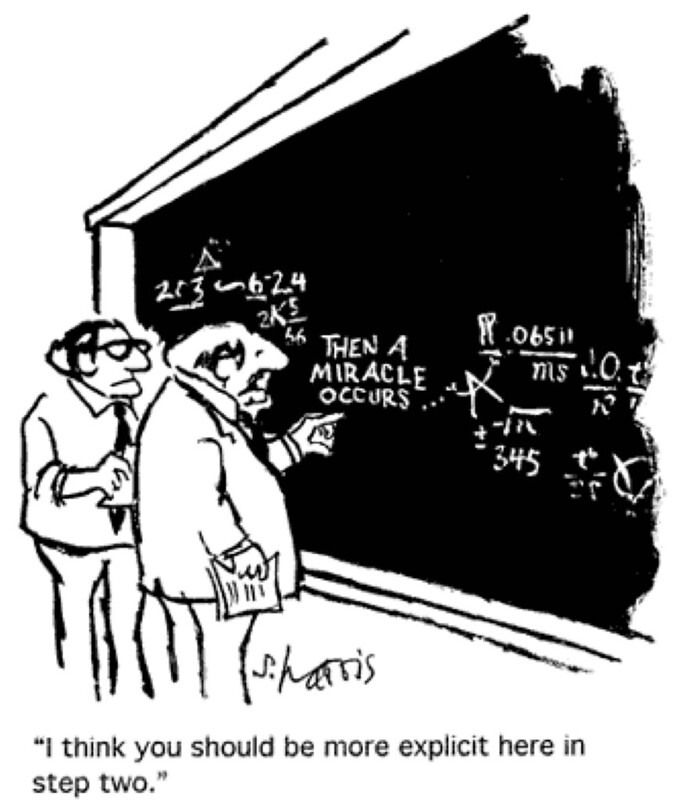
I'm sorry. I cannot do these things. Asking me to do them is abusive. I am already destroyed from the school year. I never had miracles to offer, and I certainly don't have any now.
Addendum 2: Instructional time for each course has been reduced from 288 minutes per week (59x2 + 123 + 47) pre-pandemic to fewer than 200 minutes per week (90 + 90 + 15) to 100 minutes per week (50 + 50). We lost one third of our instructional time for most of the year and will lose two thirds of our instructional time for the remainder of the year.
The district has worked hard to make sure students cannot access wifi on campus. Go ahead and re-read that if it didn't sink in on the first read. And after eight months of device-based instruction, the district expects that students electing to take their instruction on campus to go device-free for that instruction. District administration truly does expect "different but equal" in-person vs. remote courses to be prepared and implemented by instructors.
No.
Addendum 3: Hybrid Cohort Logistics. In the future, people might not believe the contortions implemented by school districts. Best to document them while they're fresh in our minds.
A. The Weekly Schedule of Cohorts and Classes. Yes, I designed this myself. Color mixing and font choice were intentional.
B. The Daily Bell Schedules. The most important consideration here was that the start and end times matched the school's pre-pandemic start and end times. It's important to have priorities.
Rio Americano alum and Virginia Tech professor, Dr. Linsey Marr, was a guest on NPR's Science Friday. Host Ira Flatow asked her a tight sequence of practical questions, and she handled them all with aplomb.
In my years of science lectures, colloquia, and conferences, I don't need that many fingers to count academics who communicate as effectively as Linsey Marr. And just because I'm biased, it doesn't mean it isn't true. Am I proud to the point of bursting? Pretty close.
It is impossible to characterize everyone's experience with teaching and learning during the COVID-19 pandemic spread throughout the world by the novel coronavirus.
Many teachers are working with unprecedented intensity to craft synchronous and asynchronous instruction that will cover and deliver academic content in an engaging and suitably rigorous way.
But the products of all this time, talent, and energy are not being universally absorbed by the students in the black Zoom thumbnails with muted microphones. There are stories in each one of those blank frames, covering a broad array of situations.
Many of us seem to have students who are completely disengaged. They are on our rosters, but we never see them, they are not in our Zooms, and they do not turn in assignments or take assessments. They rapidly descend into grades that are in the single digits, perhaps up to about 20%.
But there are some who seem to be somewhat engaged. But their participation is scattershot. They fall below 60%, but remain north of 40%. I am wondering if an F is the best grade for them while schools are wholly shut down or (worse), engaged in the pure partial daycare service that goes by the name of "hybrid".
So what about a grade of "E" for them? Not an "F" grade of fail. But not really a "D", either. "E" for evidence of engagement.
As a practical matter, the best I can do for now is to expand my range for a "D–".
One thing that a number of us are seeing more and more of in our parent-teacher conferences is parents and students who want to take an F for this semester so that they can repeat the course for a better grade next I'm not a fan of that practice. [Side note: Physics and Conceptual Physics are scheduled to be replaced by Physics of the Universe in my district next year, so that practice will be messy.]
I would let students move on with Es. Otherwise there will be a pandemic of students wanting to repeat courses when schools reopen in a meaningful way.
It's just an idea for now. But I wonder if it's an idea that will make more and more sense the deeper we get into the pandemic.
...from emails sent to district-managed student accounts. Here's the story:
In COVID-era Distance Learning, I have found Socrative to be a useful platform for administering student assessments. Among its useful features is the ability to send students their own individual scored test, showing which questions they answered correctly and which ones they answered incorrectly. The results can be sent to student email accounts with the push of a button. [You are correct to assume the instructor had to enter those email addresses into Socrative. But it's a one-time investment.]
This is a great feature for when we do Test Correction Journals.
But in my very first attempt to leverage this feature, it failed. I had, of course, tested the feature before using it with students. And it worked. But when I sent my students their test results, students insisted they did not receive them. I tried it using Chrome, I tried it using Firefox. Nothing worked. I had to create a privacy-respecting, individualized way to tell students which specific test items they missed. I created one breakout room per student, joined each one—one at a time, and announced which items they missed. While class time was burning.
I quickly came up with a functional workaround for the next period, but it fell short of what I needed it to do. And why didn't the student email solution work?
Students suggested that the district blocks third party emails from student accounts. The vendor, Socrative, meets all legal privacy standards. District tech services said they do not block third parties. Further investigation indicated the emails were blocked because they contained objectionable content. That offensive content appeared in the following question. TW: "Objectionable Content."
[Secrets of the Psychics] Psychologist and former palm-reader Ray Hyman found that he had the greatest success with clients when he
A. gave a straight-up reading in accordance with palm-reading guidelines
B. told clients the opposite of what he saw in their palms
C. imagined that he lived in an earlier era
D. assumed his clients were skeptical of palm-reading and his abilities
There it is: the objectionable content, clear as day. What's that? You didn't see it? Look again. "hymen" is right in there. Prurient anatomical terminology titillation that would offend any community's standards of propriety. High school students must be protected from such filth.
Okay, not "hymen" exactly, but "hyman," a simple misspelling of a highly salacious, practically pornographic word. Okay, not "hymen" or "hyman" exactly, but "Hyman," a not uncommon Jewish surname. I presume my college hall mate's name, Steve Hayman would trigger that comprehensive filter, too, lest bad actors use simple misspellings to skirt content filters.
Some might judge the content filtering of Jewish surnames (that are not anatomical terms) as anti-semitic. I'm confident the San Juan Unified School District doesn't intend it that way, but here we are. "Ray Hyman" triggered a full and immediate IP ban due to the district's sweeping content blocking protocols.
I was given no reason to hope that this filter would be removed by my district's tech services, now that they are aware of the embarrassing error. It seemed as if the onus was on me not to include terms that would trigger bans, and I should just know what all those terms are.
The filtering is clearly far too aggressive and highly impractical. Blocking my instructional program (without notification) for the "crime" of including a Jewish scholar's name? That's beyond a bad look.
It's indefensibly paranoid and ignorant, in my assessment.
When the pandemic closed the schools, I scrambled like most teachers. Our worlds had been thrown upside down and there was an expectation that we'd simply "throw our lessons online," hold classes on Zoom, create YouTube channels of our lessons, etc., and leverage the best among the countless sophisticated online platforms intended to allow our instructional visions to flourish while engage students completely.
Yeah...no.
More like an old desert-dweller suddenly cast into a roiling ocean while helicopters flew by and dropped materials that, when properly constructed, would make a nice boat. Or... we were expected to build the plane while it was in flight.
In any case, I found that the simple task of assigning a video for students to watch while answering questions was suddenly a challenge. Things worked better if the question sets were in Google Docs format. I could easily assign them and grade them (if need be) in Google Classroom. Many had been in PDF format: not edit-friendly for student work.
So I began the tedious task of transforming my video question sets from their PDF or Word formats to Google Docs. When I finished the ones I was in immediate need to use, I worked on all the others I had posted at The Lessons of Phyz, my Teachers Pay Teachers store.
So here's what's available—an available in Google Docs format, most sold separately or in bundles (at an inadvisable discount).
Two dozen resources are free of charge. Bundles are often discounted so heavily that I get a warning from TPT that I've gone too far. If your school has licensed TPT School Access, then I suppose all the resources are free for you.
Not long into the pandemic, TPT created a method for converting PDFs into Google Docs. By the time it was available to sellers, I was already too deep into the pain-staking process of converting them myself by hand. Well, by computer, but you know what I mean. So I just plowed through into the summer until everything in my store was converted.
I hope you find something that can help you this year and beyond.
Carl Sagan's Cosmos: A Personal Voyage spoke to many of us of a certain age who were interested in science. I remember watching every episode of the series with my family as it aired on PBS in 1980.
That series remains relevant in science classrooms, today. I began showing it in my Physics course a few years ago. We watch one episode after each unit, and there is a set of questions for students to answer while each episode plays. Eventually, I posted those question sets to a Cosmos in the Classroom web page that I added to the phyz.org site.
In 2014, season 2 arrived. It was called Cosmos: A Spacetime Odyssey, and featured Neil deGrasse Tyson as host. I developed a question set for each episode and integrated that series into my Conceptual Physics and AP Physics 2 courses. (AP Physics 1 gets no Cosmos. Shoehorning Kirchhoff in with All Things Mechanics means we have no time for any enriching tangents.)
When I entered the strange, new (to me) world of Teachers Pay Teachers, my Cosmos question sets were early product offerings. Originally available only as a complete season bundle, I have since made individual episodes available while offering the complete set at a discount. The first episode is free.
I purchased both series on optical discs (DVD and BD) so that I could easily show episodes in class. In the era of streaming, both series have gone through various iterations of streaming/not streaming on various services. Presently, episodes of Sagan's 1980 series stream on YouTube and episodes of Tyson's 2014 series can be purchased on YouTube. It may stream on a pay service, too. I can't always keep up.
Showing these episodes during Distance Learning presents a new challenge. Any series that streams on YouTube is easy and can be assigned as an asynchronous activity. Non-streaming episodes can also be shown. But only over Zoom, during synchronous sessions.
But the question sets? In class, they'd be printed and given to students to write their answers on. Remember those days?
Soon after the pandemic shutdown and the imposition of crisis teaching, I slogged through the task of turning video question sets into Google Docs format, so I could assign student-editable copies to all my students in Google Classroom, and they could turn in their digital copies when they completed the assignment. The task of converting each and every question set was not at all enjoyable.
I've worked out (through trial and error) how best to show episodes to my classes over Zoom. But as my EL student population grew, the language-intensive nature of this exercise worried me more and more. Such is the challenge of language instruction in high school: we want it to be challenging, but we cannot leave our EL students behind.
To mitigate what could be an overwhelming language load, I sought out and linked transcripts to each episode of both series. It's an open question as to whether or not transcript support is enough. But I'm grateful that the transcripts are available.
The Cosmos in the Classroom page, newly updated with transcript links, Teachers Pay Teachers links, and video search links, can be found here:
I am sure everyone has a compelling narrative about how the COVID-19 pandemic upended their lives. This post is my story with an emphasis on how we responded at my company, PASCO scientific. One of our main responses was to create distance learning lab resources. They are described and linked to at the end of this post. Feel free to skip right to them.
At the end of February my wife and I found ourselves at the Kaanapali Beach Hotel in Maui. We have been going there annually for the last 6 years for what used to be my ski week break. We used to go every few years and take our daughter and son. After they were out of high school their schedules didn't permit it. I remember telling them about our plans to go to Maui when they were in college. They replied, "but we don't get that week off anymore". We said "we know" with big smiles on our faces. We had a great week for what would be our last trip for many months. On our last day we went to nearby historic Lahaina. We went on a whale watch trip and walked up and down Front street. We were joined by hundreds of cruise ship passengers who were shuttled into town on small boats. We learned a week later that the name of the ship was the Grand Princess and it had passengers and crew infected with COVID-19. This was the ship that was stranded in San Francisco Bay for weeks as they tried to decide what to do with them.
Humpback whale spouts with the Grand Princess in the background
On our return we heard about the first known case of COVID-19 in the United States that was not due to travel. We were concerned because it was in nearby Sacramento. It also was troubling because the victim was not even given a test when they first went to the hospital with COVID-19 symptoms. Still, this was just one case so we felt safe about our plans to attend the Harry Potter and the Cursed Child play at the Curran theater in San Francisco. Our daughter is a big Harry Potter fan and this play was our birthday gift to her. We never considered not attending the play even after we learned that the cruise ship stranded in the Bay was the same one from Lahaina. We met our daughter, her boyfriend and two of her friends at the theater and had a great day. They were not concerned about COVID-19 but it did occupy a lot of our conversation. The coughing woman behind us caused some anxiety but no panic. The play is so long it is split into two parts with a long break in between. We had a nice dinner during the break at the San Francisco landmark, John's Grill. Little did we know that this would be our last large public gathering for many months.
One last large public gathering before the lock down, March 8 2020
Things happened fast at PASCO the next week. On March 9 all of our travel was cancelled. This included a trip to Qatar to conduct training and to Boston for NSTA. I was most disappointed about missing the Red Sox vs White Sox game at Fenway on April 4. That would be the first on a long list of disappointments that seem trivial compared to the hardship and suffering that would be inflicted on millions of others. On 3/11 my group, Curriculum and Professional Development, met to discuss how to respond to the developing crisis. Since preparing for Qatar and NSTA was on hold, we had time to do something for teachers who were quickly transitioning to remote teaching. We came up with a plan to create a distance learning page on our website. On it would be links to videos we would produce that would show us explaining and performing many labs that are typically done in a second semester physics, chemistry and biology class. We would post the data files and student handouts so students could perform the analysis. We also would post the teacher guide with sample analysis. We increased the trial period of PASCO Capstone and SPARKvue analysis software to 180 days. That extension continues so teachers wanting to use video analysis should check out PASCO Capstone. Additionally, we gave free access to our online textbooks, Essential Physics and Essential Chemistry. Now all we had to do was produce 21 physics, chemistry, and biology lab videos before PASCO had to shut its doors! That happened sooner than we thought. Placer County issued a shelter in place order effective on Friday, March 20. We succeeded with our goal, making and posting 21 distance learning labs with videos. We went into lock down knowing we had created something useful for teachers that were struggling to teach science online. The distance learning page is still active but the free access to Essential Physics and Essential Chemistry has ended. Here are the 10 physics labs that we posted. Make sure you log into your PASCO account to be able to access the teacher guide and data files.
We remained away from the PASCO office for a lot longer than the original 4/10 specified in the Placer County shelter in place order. We were instructed not to work but were paid our full salary until March 28. After that we could use paid time off or file for unemployment. I did the latter and found the online system worked pretty well. I never thought I would file for unemployment but since I had paid my taxes all those years, I went ahead and did it. My wife and I were thankful every day that we had recently moved from the Bay Area to a house on a lake near Auburn, California. The lake is like having a 240 acre back yard. I did a lot while in lock down, some of it even useful. Among my pandemic projects were a set of labs and videos experimenting with a chain on a pulley and a chain hitting the ground. I later used this work to create a talk for the virtual AAPT summer meeting.
The view from our deck as mist rises from Lake of the Pines at sunrise
We remained in lock down until 5/4. At that point my group and a few other key personnel were allowed back into the office. I felt safe since there were few people there and we were spaced very far apart. We were scheduled to work a 4-day 32-hour week so no more unemployment. I was able to work at home but when you develop physics curriculum you need a lot of stuff and I missed my stuff! Over the next couple of weeks more people started coming in to the office with everyone back by 5/18. We also went back to a 40 hour week. Everyone wears a mask when away from their cubicle and meetings are on Zoom. Some employees are starting to work part-time at home to reduce the density at the office too. I still feel safe there.
I had a lot of things to work on but one was a collection of labs for two new products, the Physics Starter Lab Station and the Physics Extension Lab Station. These are bundled wireless sensors that come with a lab booklet, 10 labs for each station. There are chemistry lab stations , biology lab stations, elementary lab stations, middle school lab stations, and agricultural science lab stations too but I am going to focus on physics. We also committed to make a video for each of the labs in the Physics Starter Lab Station. This was an opportunity to make more distance learning labs. Originally we had wanted to make some for first semester topics but the lock down prevented that. Over the last couple of months I finished creating the labs and we made videos and posted data files for the labs listed below:
We plan to make more of these but they are on hold because of our new project called PASCO Academy. It was inspired by the popularity of the distance learning videos but motivated by the need to create something that will bring in revenue. Schools, teachers, and home schoolers that subscribe to PASCO Academy will get access to 15 weeks of a lab video program, access to our online textbooks, and unlimited license to SPARKvue software. The lab program will consist of a teacher preparation video, a lab overview and data collection video for students, and a follow up analysis and discussion video for students. The labs will all come from the Essential Physics or Essential Chemistry online textbooks that are targeted at a regular to honors level class. My colleague JJ Plank and I are in charge of the physics PASCO Academy. If you found the distance learning video labs useful I suggest you check it out.
Like many, I've been trying to get a handle on potential distance learning tools over Summer Nocation. It seems there is a vast library of resources and web tools for instruction in general and physics instruction.
I use PhET already. I'm working with my district to gain access to Pivot Interactives. My district's LMS is Google Classroom, while our SIS is Q (Aequitas).
I have never used Flipgrid, Padlet (or Wakelet), EdPuzzle, Quizizz, Socrative, Screencastify or Screencast-o-matic, Loom, Zoom, Peardeck, Jamboard, Desmos, Edulastic, Flippity, or any other must-have tool that is explained in a video that features a noodling xylophone over a strummed ukulele while a narrator announces, "This ... is <ProductName>. The tool that lets you <do the thing you didn't even know was critical to your instruction program, but is—especially now in distance learning>". If a personal favorite of yours is in that list, you may be tempted to cast me as a luddite.
There is no shortage of webinars of experts who have been using these tools for years, where importance of Bitmoji is made unambiguous, as is the value of carefully curating of your virtual Zoom background.
At the virtual AAPT Summer Meeting 2020, the phone app, Phyphox, caught my eye (thanks to Susan Johnston's presentation). Like Google's Science Journal app, it leverages a phone's many sensors.
In addition to the activities available from Phyphox, Lawrence Livermore National Laboratory has prepared a series of physics distance learning lessons. I already had the app on my phone, but I was compelled to open it and play around on my own.
As with so many things in the realm of Distance Learning, there is a question as to whether it's appropriate to assume our students have access to a smartphone.
I'm not going to be able to construct a new and better version of the curriculum I've been honing for over 30 years in the snap of a finger. Or at all. If things work out, we'll be back to face-to-face instruction by ... 2022 is my prognostication. Maybe even Fall, 2021. For now, we're going to do our best with the situation we're in.
It's natural for us to harbor pride in our former students as they accomplish feats in the world. Of late, Dr. Linsey Marr, professor of environmental engineering at Virginia Tech has been filling my mainstream and social media feeds. Her insights into aerosol virus transmission are sought out by agencies and reporters. She's even smarter now than she was when she burned through my AP Physics B course once upon a time. So I'm beaming already.
When I tuned into this recorded webinar, I went from beaming too bursting. Because now she's the teacher and is doing a great job if it. In reality, she's been an excellent teacher for many years, but I've never managed to sit in on one of her classes.
In any case, it seems we all need to have a fundamental understanding of airborne virus transmission as we contemplate returning to classroom amid the pandemic. As always, knowledge is power. This is knowledge I had never hoped to be conversant in. But here we are.
This is not a brief lesson, but it is worth your time if you're a classroom teacher in the era of COVID-19.
As we all embark on an uncertain journey of virtual learning, many science teachers are wondering what labs may look like in this virtual space. Most of us are familiar with PhET simulations and other resources to do a virtual lab, but how do students communicate their thinking? I was inspired by Lyndsay Schobel's tweet to write up a few quick thoughts. I'm no expert, but I thought I'd share things that I've tried.
#highschoolphysics teachers. Anyone have a lab wrote up template that is digital? Or online? Even if kids do virtual labs, I still want write ups. How do you do graphs digitally? We’ve always kept a lab notebook, old school style @ITeachBoys92@PhysicsHigh@MrJoeMilliano
Link to my template In the past, I've used the template linked above with varying levels of success. I like that it prompts students what to do and gives examples of what is expected. This template is for a model development lab, where students are developing the mathematical model of a physical situation. This template is easily adapted to most model development labs, and it's easy to explicitly prompt linearization when that scaffold is needed. By the way, the particular lab that is presented in that template is one designed by Marta Stoeckel. She wrote about it in her The Physics Teacher article Defining Electric Potential Difference by Moving a Multimeter’s Ground Probe. Which leads me to my next point. Marta's lab template is better, and you can find it at the link below. Link to Marta's lab template It is designed for in-person instruction, but I think that it could be adapted pretty easily to virtual learning. It is more involved, but it also provides more scaffolding. I'll probably look at adapting it for my own curriculum this year.
Digital Graphs Tools
I have two tools I recommend: Desmos and Vernier's Graphical Analysis, and both are free! Tutorials on how to use them for graphing can be found here for Desmos and here for Graphical Analysis. A review of each follows. Desmos wins as the the most intuitive math software that's ever been made. It also has the benefit of being a more universal tool, and your students will likely be familiar with it from math class. That sort of cross-curricular software support is great. It also runs in-browser, so you don't need to download anything. It's biggest drawback is that it is a math software first and a data analysis software second. As a result, sometimes data analysis things can slip through the cracks (like remembering to label your axes). Graphical Analysis is made with graphing data in mind, which is its biggest benefit. It explicitly prompts students for axis labels and units. It also has linearization tools (tutorial here) built in as a feature. If your school has Vernier Equipment like ours does, you are also getting the students familiar with software with which their equipment can interface. The drawbacks are that Graphical Analysis requires a download (sometimes a pain for Chromebooks) and that it isn't a more widely used tool like Desmos. Since Graphical Analysis is software and not a cloud-based solution, students also need to save their work as they are working. I've found that this is not common practice among many of my students who have grown up in the Google Suite age, so they need to be reminded of that. If your students have access to a Windows or Mac computer and you want them to consider uncertainty, Kelly O'Shea has recommended LinReg in the past.
Where students need direct instruction
The biggest place students need direct instruction is in turning their graph into a readable image. Both Desmos and Graphical Analysis have options to export graphs as image files, but many students do not choose this option. Instead, they'll take screenshots of their work and then upload the screenshot. This often leads to a graph image with illegible axes. Students also create graphs with a lot of white space instead of making their data fit the graph window. Again, this is not hard to fix, but you need to provide students with instruction on how to fix it. I'd recommend just having students resubmit graphs without penalty until they get it right. If you're annoying enough, they'll only make the mistake once. This is one of the benefits of Google Doc based lab reports--they can always be updated!
Welcome to my debut Blog of Phyz post! I was encouraged by Dean Baird to write a bit about my current flexible hybrid learning plan for the 2020-2021 school year that I posted on Twitter. Great idea! I hope that it can be helpful to others as they try to plan in the face of uncertainty.
The Plan
Let's cut to the chase. Here is the outline for my plan. The rationale follows.
It is currently based on my typical pre-COVID schedule, where I teach a class two 105 minute blocks and one 50 minute class per week. It's likely that I will have to change the times, but I think the philosophy behind it is solid and adaptable.
Guiding Principles
There were three guiding principles in making this schedule: simplicity, consistency, and flexibility. Simplicity. This structure allows me to make good use of many of the high-quality resources that already exist, such as TIPERS, Ranking Tasks, Flipping Physics videos, Interactive Lecture Demonstrations, and so on. Consistency. The students will see the same general structure each week, and they will know what to expect if they have to miss class. There should never be any surprises. Hopefully this reduces the "Hey, Mr. Milliano! Did I miss anything? What did I miss?" type questions. They'll know to check the recorded videos and their independent module for the week. Flexibility. Much of this plan is structured around helping students to self-study and manage their own time. Even if we start the school year in-person, I have a suspicion that we will be online at some point. Students will need to know how to self-study, so we should explicitly prepare them for that while we're together. The teacher-led parts of the plan are things that I'd likely be able to do over video or Zoom, allowing them to work for in-person or online classes.
Independent Modules
Each module would be one week long, starting on Wednesday and ending the following Tuesday. A module would consist of seven 30-minute tasks, three to be completed in class and four to be completed at home. This could be adjusted to five 30-minute tasks and one 60-minute task, or so on.
These modules would each include at least one of each of the following.
An information transfer task. This will often be a student-choice between reading the textbook or watching Flipping Physics videos. For accountability, I will likely have students post pictures of their notes and respond to discussion board prompts in our LMS.
Sense-making tasks. These will include traditional problems, non-traditional problems, making Flipgrid videos explaining a simulation, Google Meets with classmates to collaborate and discuss ideas, posting on discussion boards, writing activities, and more.
Students will be asked to plan their own schedule, with guidance from me and the help of a graphic organizer that I'll make. As an incentive to stick to the plan and as an accountability measure, I'll check in with each student during their independent work time and see if they've stuck to their plan. If so, I'll give them a stamp or a sticker. (I'll never cease to be amazed at how motivating stamps and stickers are to 15-18 year-old students.)
Assessment
The grade will be almost entirely based on weekly quizzes, except for the occasional lab report. This means no long unit tests (to take or to grade)! I will use a version of the 10-8-6-5 flavor of Standards-Based Grading described by Kelly O'Shea on her blog.
The weekly quiz can assess any standard from throughout the whole year, and most standards will be assessed multiple times in class. The most recent standard grade will always replace an older one. Yes, even if it's worse. (Although that rarely happens.)
Student-initiated individual reassessment
Students will have the option to reassess any standard they want throughout the whole year, assuming they have put in the work to understand it better than they did previously. I will have several policies in place to make sure that these reassessments are (a) genuinely reflective for the student and (b) not an administrative nightmare for me.
Reassessments will be taken on Fridays in class during the typical self-study time. This gives me a specific time to focus on this reassessments, rather than try to do them in random spurts throughout the week.
The student must sign up to take a reassessment by the Tuesday of the week they want to reassess. This tells me that the student has put thought into what they want to reassess.
When signing up, the student must provide concrete evidence that they have done extra practice on that standard. This tells me that they have learned from their past mistakes and have put in the work to refine their thinking.
The student can only reassess two standards per week, and they must be from the same unit. This helps me write new assessments or find questions quickly and easily.
I will only write reassessments for two units and four standards per week. This means I'm not trying to write too many new assessments per week.
Only x number of students per class can reassess in a given week. I don't know what the optimal number for x is, but I know there needs to be a limit.
There is a definite final date to reassess. For me, that's Friday, December 4, 2020 for the first semester.
Why I like this plan
This plan provides flexibility. There is so much uncertainty surrounding school plans for next fall, and we all know anything could change at the drop of a hat. I believe that this structure could provide the flexibility needed to work fully in-person, fully online, or in a hybrid model. It also allows me to do both online and face-to-face with roughly the same lesson plan.
This plan is not complete. I teach in a St. Louis county school, and all county districts have agreed to release their plans together on July 20. So I don't really know what my schedule will look like yet. With this structure, though, I am confident that I can start working on building some independent study modules.
Some acknowledgements
This plan has been heavily influenced by several conversations that I've had recently with physics teachers on Twitter. I'd like to thank Wesley Morgan for encouraging me to keep things simple this year, Frank Noschese for talking about his plan to make one plan that works in any scenario, and Phillip Easton for sharing how his class has been structured in a similar way in the past.
My district plans to offer high school students three options as the 2020-21 academic year begins. 1. On-site, face-to-face instruction (details TBD; may or may not involve physical distancing and a hybrid structure) 2. Distance Learning 3. Independent Study (K-8 students can also be homeschooled) I sent this to my science department colleagues today:
As we consider returning to face-to-face, physically distanced instruction, let’s consider what has/hasn’t changed since the March 13 shutdown. Or things just worthy of consideration, period.
• There is no vaccine. The most optimistic estimates put vaccine implementation at late 2021. As in ... no vaccine throughout the entire 2020-21 school year. Seems cruel just to think about it, but not thinking about it may lead to poor decision-making.
• Predictions are difficult, especially when the future's involved. Experts seem to be convinced that a second wave will build in the fall. That presumes the first wave will subside prior to the fall. The first wave continues to escalate as of this writing.
• Therapeutics? Remdesivir (for those who can get it) may reduce hospitalization time by four days for those who pull through. That's not really much of a therapeutic.
• We know transmission likelihood is increased when people congregate indoors.
• No school’s HVAC system was designed / can be easily modified to minimize virus transmission. Our HVAC doesn’t have HEPA filtration. I'd be surprised if we have any filtration at all. Some of us can endeavor to maintain a flow of fresh air by opening doors and window vents, but that’s case by case, and involves air temperatures that may not be conducive to learning, and it subject to day to day meteorological conditions.
• What do we think about teenager discipline regarding mask-wearing and physical distancing? Every day they are on campus? Every period and during passing periods? Every student?
• What do we think the consequences will be for students who violate safety protocols?
• The virus remains active in the region. People are infected with it every day. People die from it every day. Sacramento county is on the state’s watch list due its troubling C19 stats. We are in a viral hot spot.
• Parents are tired of providing daycare. They want their kids out of their house. They need day care to get back to their jobs. This factor seems to be trumping all other facts.
Digging deeper into the ponderables and the realm of speculation ... and logistics that will eventually have concrete answers even if we don't know what they are now...
• Which students are most likely to be sent back to Face-to-Face schooling? And which ones will be kept away from school in Distance Learning? A purely academic / speculative question, but worth thinking about.
• Will students in Distance Learning be able to maintain the course selections they made in the spring? I have a small AP Physics 2 class. What if half of them want F2F and half want DL?
• If the DL requests reduce the F2F numbers on campus, will the district really maintain all the sections that were mapped out into the master schedule in the spring?
• Who has our best interests in mind is we navigate into the unknown: elected officials (or their health directors), the district, the union, who? I believe we are on our own here—even more than usual. And we know full well that policy-makers don't always make decisions based on science.
The science seems clear on the virus: closing down suppresses infection rates and reopening leads to spikes. The virus spreads mainly through respiratory droplets and aerosols emitted when doing things like speaking. Enclosed spaces are conducive to transmission.
But human nature compels us to think we can get away with reopening if we simply engage in what seems like common-sense, general public health precautions: hand-washing, temperature checks, ask people maintain distance, don masks, and dole out copious squirts of hand sanitizer.
The first schools to open will be the canaries in the coal mine. SJSUD is intent on being an early-opening district in a viral hot spot.
Who sees this going well? In such a way that we magically dodge the well-established realities of viral transmission? If anyone has a case study to point to, kindly send me a link.
I find it hard to disagree with this opinion/analysis:
[Parent surveys reportedly include a considerable bloc of advocates for students attending five days/week with no physical distancing or mask requirements: pre-COVID practices.]
We have until July 10 to request a voluntary transfer to Distance Learning for 2020-21. The details would be a post of its own. Not all requests will be honored.
UPDATE: Concerns about aerosol transmission is emerging. If you want to keep up with the aerosol/virus science, follow Dr. Linsey Marr, Professor of Environmental and Civil Engineering at Virginia Tech on Twitter. She's also a Rio Americano PhyzMaster (1991). I am as proud as can be when I think of the work she's doing and I might "squee!" a little bit when she pops up in news articles and media interviews. I am nothing but confident of her abilities, and she's handling the attention with characteristic aplomb. But I regret the circumstances that have thrust her into the spotlight.
So, what is your district doing and what is your thinking about it?
I'm posting this as a documentation of the moment we are in here in the depths of the COVID-19 coronavirus pandemic.
School districts have closed out the quarantine-crippled Spring 2020 semester and with it, an unprecedented school year.
Now comes decisions on what to do for the rapidly-approaching start of the 2020-2021 school year. Tax revenues have been decimated and school budgets stand to be slashed. But families are weary of quarantine and eager to get children back in schools. It turns out the economy of the nation cannot reopen unless children are back in schools.
But the pandemic continues, claiming over 1000 lives each day as of this writing. Packing bodies into close quarters on school campuses, where social distancing among school-age children is operationally impossible is a coronavirus's paradise.
Most district's are just now entering into deliberations on how to handle the beginning of the school year. My district hasn't announced the logistics, other than to confirm that the school year will start in accordance with the negotiated calendar date of August 13.
Full in-class face-to-face instruction lies at one extreme; full distance learning lies at the other. A hybrid model of physically-distanced small groups of students attending each class perhaps once a week is being considered, despite its minimal value as day-care.
Such a model would have the instructor deliver one in-class lesson per week while also providing four more days of distance learning, preferably asynchronous instruction. But what—exactly—to teach, and how? Across the entirety of a large, suburban unified school district?
That's what brings us to this. I see it as my district's call for miracle work to be done over the summer. Full disclosure: I do not work miracles, so I did not apply. I anticipate putting in many hours of uncompensated work over the summer to prepare curriculum on my own.
But if I were keen to collect $4000, all I would need to do is
• Attend 4-6 hours of pre-training
• Develop 45 physics lessons to be utilized within the first four months of the school year that
· provide background information and introduce new content to prepare students for in class or synchronous learning.
· build skills associated with the essential standards, allowing the teacher of record discretion on how to integrate the lessons with their distance learning environment.
· Also, these 45 lessons will include implementation recommendations, supplemental and supporting resources, formative and summative assessments.
For our nine high school district, there will be one physics practitioner responsible for the design of these 45 lessons. I wish that person well.
___
SIDE LETTER OF AGREEMENT (SLA) Between SAN JUAN UNIFIED SCHOOL DISTRICT (District) and the SAN JUAN TEACHERS ASSOCIATION (Association) Summer 2020 Work to Prepare Lessons Aligned to Essential Standards Background In any typical year, we may face challenges of getting all students to reach mastery of all standards. Given this unprecedented time, we believe that it will be even more challenging to cover all of the standards in 2020-2021 as we would during a typical school year. In an attempt to reduce stress and address this reality, while still trusting professionals and believing in professional autonomy, we have recently convened joint teams of practitioners and administrators to draft guidelines for ‘Essential Standards’ for each grade level and core academic content area. Within this work, essential standards represent the minimum a student must learn to reach higher levels of learning. In order for a standard to be identified as “essential” it would either be a power standard or building block standard that is necessary for students to master in order to be: ❖ successful later in the year ❖ successful in the next grade or course level ❖ successful across other domains or content areas Intent ● To utilize the expertise of San Juan practitioners and support their colleagues by creating, developing and providing a bank of lessons that are accessible online so that in-person or synchronous learning can focus on differentiation, relationship building, assessing learning, etc. ○ The bank of lessons will be available for practitioners to supplement and support their focus on the essential standards guidelines. ○ These lessons may be used to help practitioners use alternative methods of instruction (for example flipping the classroom). Agreement Scope of work (Elementary): The goal of each practitioner or team of practitioners is to curate content and create lessons to support the implementation of essential standards guidelines up to winter break. Scope of work (Secondary): The goal of each practitioner or team of practitioners is to curate content and create lessons to support the implementation of essential standards guidelines for the first semester. Expected deliverables for essential standards include: ● A fully prepared unit of study which can be delivered in an asynchronous manner ○ Lesson plans housed in the San Juan Google drive (each practitioner/team will develop 45 lessons in total, by content and grade level, to be utilized within the first four months of the school year). ■ The focus of each lesson in a unit of study is to: ● provide background information, and introduce new content to prepare students for in class or synchronous learning. (The in-class or synchronous learning is where the classroom teacher can differentiate for individual or small group practice, collaboration or extention of the concepts being taught.) ● build skills associated with the essential standards, allowing the teacher of record discretion on how to integrate the lessons with their distance learning environment. ○ Implementation recommendations ○ Supplemental and supporting resources ○ Formative and summative assessments Practitioners selected will: ● participate in pre-training (4-6 hours in total, dates and times TBD) ○ Technology and platform integration ○ Review lesson exemplars/templates ○ Calibration of deliverables ● collaborate weekly with the district's professional learning support teams to ensure coordination of efforts and deliverables Selection Assignments Both parties value all subject matters that are taught in San Juan Unified and believe that a comprehensive education includes music, art, physical education, health, and electives. Unfortunately, during this crisis both funds and time are limited. The parties realize regrettably that the assignments below do not reflect all subject matter, courses and grade levels. These grades and subjects were identified because they align with the implementation of core content within the essential standards guidelines. As funding and time allows, other grade levels and content areas may be added in the future. The parties agree that eighty-two (82) practitioners will be hired from the SJTA bargaining unit for the purpose of facilitating the implementation of Essential Standards Guidelines. A. Elementary - Grade level and subject teams are set as follows: a. i. English Language Arts ( 2 practitioners per grade level K-5) ii. Math (2 practitioners per grade level K-5) iii. ELA and Math (2 practitioners from TK :1 for ELA and 1 for math) iv. Social studies (3 practitioners- 1 per grade for grades 3, 4 and 5) v. Science (3 practitioners - 1 per grade for grades 3, 4 and 5) vi. ELD (2 practitioners supporting K-2 and 3-5) vii. Special Education Support (2 practitioners supporting K-2 and 3-5) viii. Dual Immersion (4 practitioners covering K-8) B. Middle School - Grade level and subject teams are set as follows: a. Grades 6: i. English Language Arts (1 Practitioner) ii. Math (2 Practitioners) iii. Social Studies / History (1 Practitioner) iv. Science (1 Practitioner) b. Grade 7: i. English Language Arts (1 Practitioner) ii. Math (2 Practitioners) iii. Social Studies / History (1 Practitioner) iv. Science (1 Practitioner) c. Grade 8: i. English Language Arts (1 Practitioner) ii. Math (2 Practitioners) iii. Social Studies / History (1 Practitioner) iv. Science (1 Practitioner) C. High School a. English: i. Grade 9 - ELA (2 Practitioners) ii. Grade 10 - ELA (2 Practitioners) iii. Grade 11 - ELA (2 Practitioners) b. Math: i. Integrated Math 1 (2 Practitioners) ii. Integrated Math 2 (2 Practitioners) iii. Integrated Math 3 (2 Practitioners) c. Social Studies / History i. World History (2 Practitioners) ii. US History (2 Practitioners) iii. US Government (1 Practitioner) iv. Economics (1 Practitioner) d. Science: i. Biology (2 Practitioners) ii. Chemistry (2 Practitioners) iii. Physics (1 Practitioner) e. World Language: i. Spanish1 and 2 (2 Practitioners) ii. French 1 and 2 (2 Practitioners) Specific Responsibilities Create and curate resources for essential standards guidelines for instructional staff: ● A fully prepared unit of study which can be delivered in an asynchronous manner ○ Lesson plans housed in the San Juan Google drive ○ Implementation recommendations ○ Supplemental and supporting resources ○ Formative and summative assessments Term The term shall be June - July 2020. The deliverables noted above are due based on the timeline below: o Fully prepared units of study for August - September are due no later than July 22, 2020 o Fully prepared units of study for October - December are due no later than July 31, 2020 Eligibility ● Be a credentialed teacher with permanent status. ● Must have ‘met’ standards in two most recent evaluations. ● Understanding of unit and assessment design aligned to standards. ● Ability to collaborate with colleagues and work effectively in a team environment. ● Demonstrate exemplary teaching ability, as indicated by, among other things, effective interpersonal communication skills, subject matter knowledge, and mastery of a range of teaching strategies necessary to meet the needs of pupils in different contexts. ● Current school year assignment (2019-20) involves providing direct instruction to students (preferred, not required). A member interested in being considered for the Essential Standards Guidelines Summer 2020 work shall: ● Submit a completed letter of interest to summerschool@sanjuan.edu by Friday June 12, 2020 which shall include: o Relevant experience o A list of references including at least one administrator and one colleague o A sample distance learning lesson that has been taught sometime between March 13, 2020 and June 5, 2020. Compensation ● $4,000.00 stipend to be paid no later than September 30, 2020 This SLA will sunset on July 31, 2020.
Some critters are totally adorable when they're babies. Conspiracy theories do not. Maybe you came of age in science, reasoning, skepticism, and critical thinking after the "truthers" of 9/11 ran their course.
But given the magnitude of the coronavirus/COVID-19 pandemic, the ground was fertile for new brand new conspiracy theories. Nonsense was sure to arise. And arise it did.
Plandemic
A 26-minute "trailer" for a promised documentary has exploded on YouTube. The video violates YouTube's Terms of Service, so they take it down. But it pops up with a different video address soon enough.
Watched in a vacuum of ignorance, it might seem appealing. A plucky scientist, hounded by the omnipotent "they" tells her story of oppression and betrayal. You might know "they" from such hits as "they don't want you to know" and "they have been keeping X secret from the public" and so on. There is nothing worse than "they". Nuh Thing!
The video is in a perpetual out of control spin which continues into the manifesto that is the video description. But again, it's an appealing narrative for the uninitiated. Such unfairness; such corruption.
When it bubbled up to a YouTube doctor (ZDogg), he was dumbfounded by the pure dumbosity of the video's production and claims.
A Doctor Reacts to Plandemic
I know he seems brief in his dismissal. And annoyed.
If you need something a bit more concise, try Big Think's "The anti-vaxx agenda of The Plandemic". There's even an audio version with the print article.
Since Plandemic, itself, violates YouTube's terms of service, I must leave it to you to use your Google skills to find it. Any link I provide will likely go dark before you get to click on it.
I am not a fan of censorship, and YouTube knocking this video down plays into the hands of the conspiracists who claim oppression. On the other hand, it's YouTube's platform: of you don't want to play by their rules, host your video on your own platform. It's not rocket science. The promulgators enjoy the censorship, so they won't host it, themselves.
If you are predisposed to accept conspiracy theories, you are probably already a Plandemist, admonishing the sheeple to wake up!
In any case, the baby conspiracy theory of Plandemic has been born. Where it goes from here depends on all of us.
Why is this disingenuous hot mess dangerous? Because it's attempting to plant the shopworn anti-vcxx message relative to the hoped-for coronavirus vaccine. The Plandemists will claim (without evidence) that a COVID-19 cure will be the product of the shadowy "they" in a money-grubbing, power-hungry. another evil-hyphenation-goes-here cabal set to control the world population. A population made docile by, of course, the vaccine.
I'd say the best response is "Cool story, bro, but eh ... hard pass." But the story really isn't all that cool.
So...this video is now circulating widely on social media. This woman is titled as a Molecular Biologist/Medical Researcher. The guy interviewing her claims to be a 'Father/Filmaker'. The last I looked 'Filmmaker' has two 'M's in it. Anyway...this video's defenders seem so drawn into it...I took some time to evaluate, and fact check this.
00-3:00 - nothing corroborated that 'they wrecked her life'
2:07 - footage of police raid is file footage, and not her supposed 'raid'
4:10 - Fauci directed cover up. Proof? No proof given, no contrary voices to her
5:45 - paper she wrote contradicting Fauci. Where is this paper? That should be easy to show, and physically have excerpts of paper for the video
7:35 - Fauci and CDC director Redfield own patents. Proof? A look at the patent office should be indication. They don't do this easy check. So, no proof
8:15 - Who is this 'expert'? No graphic I.D., so we can check his credentials
9:26 - Bill Gates accusations...Proof? None offered
10:23 - she says 'I can't say it was man made, but'...what exactly is she saying? This is intentionally vague
10:34 in - Quick length of time proves virus was manipulated. Proof that this is always the case?
10:54 in - she says 'Virus didn't occur at a market'. Proof?
11:26 in - article is from Dailymail.co.uk, which is a British conservative tabloid...hardly objective
11:31 in - footage from CGTN, which is China State-Run TV, and who is the 'reporter'? Could be anyone speaking over the footage. Could be friend of the 'filmmaker' or 'fimmaker'...we don't know
11:38 in - article from NationalFile.com, rated as an 'Extreme Right-Wing conspiracy site
13:55 in - Bakersfield doctors, that have been widely discredited. They get a lot of time in this video
14:50 in - Host says that he 'talked to many doctors' that incentivize Covid-19. Where is the footage of ANY of them being talked to? That would be what a 'filmmaker' or ummm 'Filmmaker' does.
15:08 in - Doctor on clip says that hospitals are paid '$13,000 for Covid diagnosis, and $39,000 for a Covid ventilator'. Snopes link below widely weakens that claim
15:29 in - person in clip has medical scrubs on, but who is he? could be an average person with a medical shirt on. We never see his name or title.
15:40 in - proof of Italy vaccine?
16:40 in - from 'WashingtonTimes' - a conservative daily newspaper...and who is 'reporter' narrating? Could be anyone
17:12 in - Mikovits says 'thousands of documents on hydroxychloroquine'...well, where are ANY of these documents? None offered
18:55 in - She says flu vaccine makes a person more susceptible to Coronavirus. That is disproven in link below
21:02 in - host says 'You're not the first person to tell me that we are doing the exact opposite of what we should be doing'...well, 'filmmaker'...show us ANY of these other people
22:55 in - who is this doctor? No I.D. to check his credentials
24:55 in - she says 'every medical person who has learned about this has turned their opinion around'. Show us ONE person that has changed their views? None offered.
Below, and in the comments, I will post a bunch of links that debunk some of the claims made in this video, and I will also cut and paste them here.
For those of you looking at this post, and saying 'geez'...I spent about an hour and a half on this. It doesn't take much time to scrutinize/fact check a 26 minute video, especially this one.
She is selling a book on this...so this literally drums up interest in her book. Who is the host? A family member? A good friend? We don't know...do we...
Actual journalism always backs up statements. This does nothing to back up claims. This has no one on to debunk her, and it also has no one on to back her claims. Yet, somehow, many people have attached themselves to a doctor, whom they know only from a YouTube video, who has questionable credentials, and is questioned about her repeated attempts to create conspiracy theories...maybe to sell more books. If you click to watch the video...enjoy the marketing attempt.