My joyless, long-winded assessment of the new AP Physics 1 and AP Physics 2 exams below was long enough as it was. I couldn't suitably fit in all my misgivings and supporting tangents.
As I said, the redesigns is a shining utopia that may well be worthy of pursuing. The old AP Physics B has been torn apart and used for parts in the new, sweepingly grander vision. In very real ways, classroom teachers have been compelled to abandon the old college replacement course and deliver a course that matches what many would describe as the best college courses offered in the nation (if not the world). All in the confines of a high school setting.
The new course represents a rebuilding from the ground up. Everything is different—for the better. To pass AP Audit muster, teachers must attest to conforming to the many layers of the New Vision, and that they've rebuilt their courses from the ground up.
What good fortune it is for the College Board that in spite of the upheaval visited upon classroom teachers far and wide, the exam, itself, required no real structural change!
The old exam consisted of dozens of multiple choice questions and a handful of free-response questions. After the exhaustive overhaul required of AP-approved physics teachers, the corresponding new exam consists of dozens of multiple choice questions and a handful of free-response questions. At the College Board's end, the multiple choice will require machine scoring as it already exists, and the free-response will require readers and table leaders as they have been using since the exam's inception.
So it's not the same old wine in a new bottle. Rather, a completely new wine in an old bottle. As demanded by the bottlers, themselves. Good fortune for the bottlers; tough rows to hoe for the workers in the vineyards.
Monday, February 29, 2016


Wednesday, February 24, 2016
물리학에 오신 것을 환영합니다
That's the sign I posted near my classroom door to welcome a group of South Korean visitors today. The city officials were guests of Rio Americano's Civitas program. Their visit coincided with my student teacher's class, so I was free to chat with them. They had great questions and had the foresight to document their visit photographs. My kind of people!
They assured me that my sign was a correct translation of "Welcome to Physics," and I was in no position to argue with them—or with Google Translate. A Korean student (whom I adore) later scolded me for being so formal in my greeting. I gave her the sign and the task of providing a friendlier, more casual greeting for the next time I am visited by a Korean delegation.
If you've never tried the Translate smart phone app, fire it up and try it on this message via its photo analysis feature. Very impressive!
They assured me that my sign was a correct translation of "Welcome to Physics," and I was in no position to argue with them—or with Google Translate. A Korean student (whom I adore) later scolded me for being so formal in my greeting. I gave her the sign and the task of providing a friendlier, more casual greeting for the next time I am visited by a Korean delegation.
If you've never tried the Translate smart phone app, fire it up and try it on this message via its photo analysis feature. Very impressive!
Monday, February 22, 2016
Why I no longer recommend the AP Physics exam
[This post carries the "rant" label, so it is presumed that your mileage may vary. I never presume my own experience is universal. None of this post refers to AP Physics C.]
Since I began teaching Advanced Placement Physics B in 1986, I have strongly encouraged all my AP students to purchase and take the AP Physics exam each May.
For now, I am recommending that they do not.
As we know, AP Physics B has been re-imagined as AP Physics 1 and AP Physics 2. The old vision of AP Physics acting as a college equivalent was dispensed with in the redesign. AP Physics B (as well as content standards prevalent in the 2000s) were seen as too content-focused, and lacked emphasis on process. Not an unfair criticism, to be sure.
The newly redesigned AP Physics 1 and AP Physics 2 are ambitiously constructed, multi-layered visions of physics course utopia. They are Lamborghinis sent in to replace the Camaros that existed until now. College courses, for the most part, remain largely content-driven.
The vision of the AP course being a college equivalent has been abandoned. AP Physics 1 and AP Physics 2 are the best courses time, talent, and energy can buy. Meticulously crafted courses of physics perfection.
But as of now, it's beyond my budget. And beyond the budget of my highly capable students. It is very much in an experimental phase. Version 1.0 of a complex new machine that we have been asked to be the early adopters of.
There is evidence to suggest the nation's AP Physics 1 and 2 teachers and students failed to abruptly snap to The College Board's new vision. Scores between the 2014 AP Physics B administration and the 2015 AP Physics 1 and 2 administrations show a massive shift in the wrong direction.
In 2014, more than 60% of AP Physics B candidates passed the exam with a score of 3 or better. Of those, 34% passed with a 4 or 5 (over 15% were 5s).
In 2015, more than 60% of AP Physics 1 candidates failed to earn a score of 3 or better. Fewer than 20% of the candidates scored a 4 or 5 (only 4% were 5s).
It could be that America's physics students suddenly became less capable. But that's not likely. It's more likely that America's best and brightest physics students weren't prepared for the radically different new exam.
The College Board would argue that they provided extensive information on the newly designed courses. And indeed they have. Exhaustive, really.
But part of The New Vision is that there is no longer a blueprint for exactly what content is to be covered and in which amounts. Physics content mastery is no longer tested, it is now presumed. Instead of distributing questions across a well defined subject-matter topic list, questions are not cast across broadly-defined Big Ideas and Science Practices. Mastery of these can be assessed via questions that merely use physics content as the canvas upon which the Big Ideas and Science Practices are painted.
True mastery of the Big Ideas and Science Practices, via Learning Objectives and bits of Essential Knowledge, painted on the canvas of physics, demands a level of engagement I find to be unreasonable. Don't get me wrong, I'd love for my students to be single-mindedly focused on everything we do in physics: in class and beyond the classroom. But my students have other things going on in their lives that demand attention. Many, many other things, as is typical of highly capable, multi-talented college-bound students.
It is certainly The College Board's prerogative to offer a product for purchase as they see fit. But in my opinion, they got it wrong. My misgivings may well be mine, alone. But that's not the sense that I get when talking candidly to other AP Physics teachers. I assume some folks love the redesign. I trust they'll light me up in the comments because I have not talked to such folks in person.
Speaking only for myself, I would say The College Board did what most august bodies do when undergoing a revisioning process: they spent their time, talent, and energy creating a grand vision. With a multi-dimensional outline and hierarchy. A complex and ornate structure. They then committed that vision to a tome of well over 200 pages.
What would have been more useful to me is for them to have spent more time, talent, and energy developing valid practice items. Practice multiple choice, practice multi-correct, practice free response (all types). I am very much "an assessment guy," having served on AAPT's Editorial Exam board, California's Golden State Exam development team, and California's Content/Assessment Review Panel.
So my process is inductive rather than deductive. If you show me a large sample of assessment items, I can determine what your grand vision was. But if you show me your grand vision, I cannot figure out exactly what your assessment items will look like. Maybe others can deduce better than I can.
But I have yet to see a grand, sweeping process (including you, NGSS) that respects the value of assessment and released items. The spotlight is always shown upon The Vision. Pesky questions about assessment and released items are marginalized with responses such as, "We'll get to that later," "We don't have the budget for that," "The task of item development will be given to other people who are not part of the Blue Ribbon Visioning Panel".
AP Physics redesign advocates encourage teachers to participate in week-long AP training sessions, and I do not doubt that such trainings offer great value (assuming the time and money can be managed). I also know of someone who did the AP training and was left with the impression that rotation was a huge focal point for AP Physics 1. Workshops will always carry the biases of their instructors.
What's more, suppose a student does make a passing score on the redesigned exam. They've shown they can drive that Lamborghini with aplomb. As far as I know, colleges are no more likely to grant credit for the post-redesign exam than they were for the pre-redesign exam.
I'm already past TL;DR territory, so I'll wrap it up. For now, I cannot recommend my students pony up $100 to (most likely) end up on the wrong side of the cut points on an experimental exam. I'll do my very best to prepare them for the exam. But it's fair that they know the extent to which the odds are not in their favor.
With luck, there will be a time in the future by which a sufficient catalog of released items exists so that I feel comfortable that my students will be able to fare well on the AP1 or AP2 exam. But I have no reason to think released item development is a priority for The College Board. So I'll have to wait them out. I do not know how long it will take.
I do know of schools that are switching from AP1 and 2 to AP Physics C, and I know of colleagues who are looking for college credit alternatives to AP1 and AP2. I understand the motivations for these moves completely. To those who are delighted with the redesign, I wish only happiness and good cheer. And the hope that they realize their own experience is not universal.
Since I began teaching Advanced Placement Physics B in 1986, I have strongly encouraged all my AP students to purchase and take the AP Physics exam each May.
For now, I am recommending that they do not.
As we know, AP Physics B has been re-imagined as AP Physics 1 and AP Physics 2. The old vision of AP Physics acting as a college equivalent was dispensed with in the redesign. AP Physics B (as well as content standards prevalent in the 2000s) were seen as too content-focused, and lacked emphasis on process. Not an unfair criticism, to be sure.
The newly redesigned AP Physics 1 and AP Physics 2 are ambitiously constructed, multi-layered visions of physics course utopia. They are Lamborghinis sent in to replace the Camaros that existed until now. College courses, for the most part, remain largely content-driven.
The vision of the AP course being a college equivalent has been abandoned. AP Physics 1 and AP Physics 2 are the best courses time, talent, and energy can buy. Meticulously crafted courses of physics perfection.
But as of now, it's beyond my budget. And beyond the budget of my highly capable students. It is very much in an experimental phase. Version 1.0 of a complex new machine that we have been asked to be the early adopters of.
There is evidence to suggest the nation's AP Physics 1 and 2 teachers and students failed to abruptly snap to The College Board's new vision. Scores between the 2014 AP Physics B administration and the 2015 AP Physics 1 and 2 administrations show a massive shift in the wrong direction.
In 2014, more than 60% of AP Physics B candidates passed the exam with a score of 3 or better. Of those, 34% passed with a 4 or 5 (over 15% were 5s).
In 2015, more than 60% of AP Physics 1 candidates failed to earn a score of 3 or better. Fewer than 20% of the candidates scored a 4 or 5 (only 4% were 5s).
It could be that America's physics students suddenly became less capable. But that's not likely. It's more likely that America's best and brightest physics students weren't prepared for the radically different new exam.
The College Board would argue that they provided extensive information on the newly designed courses. And indeed they have. Exhaustive, really.
But part of The New Vision is that there is no longer a blueprint for exactly what content is to be covered and in which amounts. Physics content mastery is no longer tested, it is now presumed. Instead of distributing questions across a well defined subject-matter topic list, questions are not cast across broadly-defined Big Ideas and Science Practices. Mastery of these can be assessed via questions that merely use physics content as the canvas upon which the Big Ideas and Science Practices are painted.
True mastery of the Big Ideas and Science Practices, via Learning Objectives and bits of Essential Knowledge, painted on the canvas of physics, demands a level of engagement I find to be unreasonable. Don't get me wrong, I'd love for my students to be single-mindedly focused on everything we do in physics: in class and beyond the classroom. But my students have other things going on in their lives that demand attention. Many, many other things, as is typical of highly capable, multi-talented college-bound students.
It is certainly The College Board's prerogative to offer a product for purchase as they see fit. But in my opinion, they got it wrong. My misgivings may well be mine, alone. But that's not the sense that I get when talking candidly to other AP Physics teachers. I assume some folks love the redesign. I trust they'll light me up in the comments because I have not talked to such folks in person.
Speaking only for myself, I would say The College Board did what most august bodies do when undergoing a revisioning process: they spent their time, talent, and energy creating a grand vision. With a multi-dimensional outline and hierarchy. A complex and ornate structure. They then committed that vision to a tome of well over 200 pages.
What would have been more useful to me is for them to have spent more time, talent, and energy developing valid practice items. Practice multiple choice, practice multi-correct, practice free response (all types). I am very much "an assessment guy," having served on AAPT's Editorial Exam board, California's Golden State Exam development team, and California's Content/Assessment Review Panel.
So my process is inductive rather than deductive. If you show me a large sample of assessment items, I can determine what your grand vision was. But if you show me your grand vision, I cannot figure out exactly what your assessment items will look like. Maybe others can deduce better than I can.
But I have yet to see a grand, sweeping process (including you, NGSS) that respects the value of assessment and released items. The spotlight is always shown upon The Vision. Pesky questions about assessment and released items are marginalized with responses such as, "We'll get to that later," "We don't have the budget for that," "The task of item development will be given to other people who are not part of the Blue Ribbon Visioning Panel".
AP Physics redesign advocates encourage teachers to participate in week-long AP training sessions, and I do not doubt that such trainings offer great value (assuming the time and money can be managed). I also know of someone who did the AP training and was left with the impression that rotation was a huge focal point for AP Physics 1. Workshops will always carry the biases of their instructors.
What's more, suppose a student does make a passing score on the redesigned exam. They've shown they can drive that Lamborghini with aplomb. As far as I know, colleges are no more likely to grant credit for the post-redesign exam than they were for the pre-redesign exam.
I'm already past TL;DR territory, so I'll wrap it up. For now, I cannot recommend my students pony up $100 to (most likely) end up on the wrong side of the cut points on an experimental exam. I'll do my very best to prepare them for the exam. But it's fair that they know the extent to which the odds are not in their favor.
With luck, there will be a time in the future by which a sufficient catalog of released items exists so that I feel comfortable that my students will be able to fare well on the AP1 or AP2 exam. But I have no reason to think released item development is a priority for The College Board. So I'll have to wait them out. I do not know how long it will take.
I do know of schools that are switching from AP1 and 2 to AP Physics C, and I know of colleagues who are looking for college credit alternatives to AP1 and AP2. I understand the motivations for these moves completely. To those who are delighted with the redesign, I wish only happiness and good cheer. And the hope that they realize their own experience is not universal.
Sunday, February 21, 2016
New and improved video pages

 Also new, an index page for The Mechanical Universe episodes I use. It links to Annenberg's Learner.org Mechanical Universe page and to my question set worksheets are there for the College Editions. The high school adaptations don't yet stream, so you'll need to pony up to get the short and sweet versions stripped of the calculus. But links to my question sets are there. Is The Mechanical Universe growing long in the tooth? Perhaps. Is there a video series as solid on the fundamentals of physics? None that I know of.
Improved: I've update the burgeoning YouTube Physics page to include this video set, the Mount Tavurvur Volcano Eruption, the Victoria Phyz Falls Baird Bungee Bounce, and Bree's Color Subtraction videos, among others. Worth a visit if you've never been or haven't been in a while.
Classics: The Hewitt Drew It Physics Screencasts remain conveniently catalogued here.
 Full Conceptual Physics Alive! Hewitt lecture videos are available for purchase on DVD or streaming from Arbor Scientific. My video question sets are also available at ArborSci. The videos and questions sets come in very handy for everyday lessons, and become golden in the event of unexpected absences (illness, jury duty, etc.).
Also classic: Cosmos. Cal Sagan's Personal Voyage and Neil deGrasse Tyson's Spacetime Odyssey.
Because there are so many flavors of video I like to have access to, I've created a separate index page (and removed most links from the phyz.org home page).
The Video Index Page of Phyz. Now how silly do you feel for squandering that ski week that's coming to an end?
Got a hot tip for a pedagogy-rich video clip or series? Let us know!
Friday, February 19, 2016
Too many teachers are getting climate science wrong
There is consensus among climate scientists:
But the needle has moved on this one. Fairly dramatically. If we hope to convey contemporary reality to contemporary students, we need to move out narrative accordingly.
NCSE: Climate Confusion Among US Educators
NPR: Why Science Teachers Are Struggling With Climate Change
"They've all said: [climate change is] happening, and it's being caused by human activity. Add to that the fact that most of the published literature that you see in the big journals, like Science and Nature and Geophysical Research Letters, is all showing a consensus. It's overwhelming."But many classroom science teacher are getting climate science wrong. How so?
Well, roughly 30 percent tell students that humans are only partly to blame for climate change, along with natural causes. The problem with that, Plutzer says, is that it sends mixed messages, suggesting that the causes of climate change are still up for debate — when there is no debate among the vast majority of climate scientists. As for the rest ...It's likely we came up in a time when the debate over global warming was robust, and consensus did not yet exist. And we may be accustomed to basic tenets of science not evolving so quickly. So we're comfortable teaching climate science as we learned it 20 years ago or so.
"About one in 10 [teachers] seem to be denying a human role altogether," while the remaining 5 percent don't talk about causes at all.
But the needle has moved on this one. Fairly dramatically. If we hope to convey contemporary reality to contemporary students, we need to move out narrative accordingly.
NCSE: Climate Confusion Among US Educators
NPR: Why Science Teachers Are Struggling With Climate Change
Thursday, February 18, 2016
Gravity's just a habit
Few people have more fun with physics—while being paid for it—than physics teachers. The band members of OK Go are an exception to this rule. It was not hyperbolic to characterize their video for "This Too Shall Pass" as an instant classic.
And if you haven't enjoyed their video for "Upside Down & Inside Out", consider this post to be a public service. It would be parabolic to characterize this one as an instant classic. Here's the video. And you'll want to go full screen.
OK Go - Upside Down & Inside Out
Such a work of video wonderfulness deserves a worthy "making of" companion. Once again, OK Go doesn't disappoint.
OK Go - Upside Down & Inside Out: Behind the Scenes - How We Did It
If you know of additional resources related to this video gem, let us know in the comments.
And if you haven't enjoyed their video for "Upside Down & Inside Out", consider this post to be a public service. It would be parabolic to characterize this one as an instant classic. Here's the video. And you'll want to go full screen.
OK Go - Upside Down & Inside Out
Such a work of video wonderfulness deserves a worthy "making of" companion. Once again, OK Go doesn't disappoint.
OK Go - Upside Down & Inside Out: Behind the Scenes - How We Did It
If you know of additional resources related to this video gem, let us know in the comments.
Friday, January 29, 2016
Dial it down a notch
As a mom I am surrounded by noisy things. Not just my kids but their accessories. It seems every toy nowadays has a speaker in it and they rarely have a volume adjustment. Most of them are at a reasonable volume although they will still startle you if you unwittingly step on them.
 Then there are the LOUD ones with volumes that can only be described in all caps. You can hear them sound across the house and they are the ones you hope bleed the batteries dead quickly. (They never are.) This game, in an unassuming cute telephone, starts as you pick up the handset and using the plastic tabs that reside inside you can play several games to practice counting, number recognition and more. Seems innocent, and educational right?
Wrong. The thing is LOUD. Loud enough to drown out any conversation while it is speaking. And it will speak as long as it wants, until you replace the handset. Which can come detached by the way, great design flaw. There is an on/off button but no volume control. So one night I had had enough.
I removed the tab holder that twists on to the bottom and removed four small screws that held the blue base to the white top. I found the speaker and was surprised at the size of it compared to the toy. Since I had two very upset children demanding, "Momma, why broken? Momma fix!" it was going to be quick modification without rewiring. After the fact I found this nice instructable with details on adding a resistor to lower the speaker volume. But Momma didn't have time for that.
Ideally I would have found a scrap of cloth to fit over the holes that the speaker fit up against but the lower lips were starting to protrude from my kids' faces. So I cut a few post-it notes and layered them over the holes from the inside of the phone. I think I ended up with five pieces of paper covering it with some scotch tape. The blue housing you see around the speaker slides into the space right in front of the post-it notes in the photo below. In retrospect if I had used cloth it may have been a tight fit getting the speaker back in its place. Upon reassembly it was noticeably quieter.

Now the children can play the game and I don't have to hear it from the other room. And I can present this problem to my students, perhaps as an open ended engineering thought problem. Since we build speakers in our electromagnetism unit (post sound unit and electricity unit) after they create one I can ask students how to lower the volume with a few restrictions:
1. How could you lower the volume by only changing the circuit? (lower current, raise resistance)
2. How could you lower the volume by only changing the speaker? (decrease magnet or electromagnet strength)
3. How could you lower the volume by only changing the outgoing sound wave? (impede the sound waves' travel to your ear)
I've already started a mental list of which other toys need this treatment. Perhaps my in-classroom school intercom ...
 Then there are the LOUD ones with volumes that can only be described in all caps. You can hear them sound across the house and they are the ones you hope bleed the batteries dead quickly. (They never are.) This game, in an unassuming cute telephone, starts as you pick up the handset and using the plastic tabs that reside inside you can play several games to practice counting, number recognition and more. Seems innocent, and educational right?
Wrong. The thing is LOUD. Loud enough to drown out any conversation while it is speaking. And it will speak as long as it wants, until you replace the handset. Which can come detached by the way, great design flaw. There is an on/off button but no volume control. So one night I had had enough.
Ideally I would have found a scrap of cloth to fit over the holes that the speaker fit up against but the lower lips were starting to protrude from my kids' faces. So I cut a few post-it notes and layered them over the holes from the inside of the phone. I think I ended up with five pieces of paper covering it with some scotch tape. The blue housing you see around the speaker slides into the space right in front of the post-it notes in the photo below. In retrospect if I had used cloth it may have been a tight fit getting the speaker back in its place. Upon reassembly it was noticeably quieter.

Now the children can play the game and I don't have to hear it from the other room. And I can present this problem to my students, perhaps as an open ended engineering thought problem. Since we build speakers in our electromagnetism unit (post sound unit and electricity unit) after they create one I can ask students how to lower the volume with a few restrictions:
1. How could you lower the volume by only changing the circuit? (lower current, raise resistance)
2. How could you lower the volume by only changing the speaker? (decrease magnet or electromagnet strength)
3. How could you lower the volume by only changing the outgoing sound wave? (impede the sound waves' travel to your ear)
I've already started a mental list of which other toys need this treatment. Perhaps my in-classroom school intercom ...
Wednesday, January 27, 2016
Scientist Valentines: The Next Generation
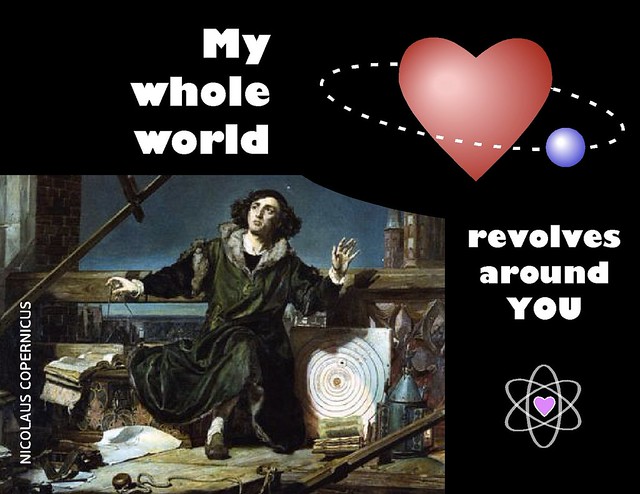
I've been sharing my collection of Scientist Valentines for a few years now. I had a great time producing them. It's a nice mix is content knowledge, creativity, and graphic design.
Scientist Valentines
But why keep the fun to myself? I decided it might be fun to have students try their hands at producing Scientist Valentines. So I put together a set of instructions, and have now shared those instructions with my AP Physics 2 students. They were recipients of these valentines last year, so they likely understand the nature of them.
I have no idea what they'll come up with, but that's why I'm doing this. As I said in my Dank Memes post, physics is easy; comedy is hard.
I provided a list of science luminaries that I had not yet valentined. But they are welcome to go "off the grid" and valentine scientists I didn't list. They can also re-valentine a scientist I've already honored.
I've designated Scientist Valentines am extra credit project. It seems wrong to force students to produce such a thing if they are not motivated to do so. Here are the instructions.
Make Your Own Scientist Valentine (a.k.a., The Next Generation)
I'll share the best of what my students come up with. And I'd be delighted to see what your students come up with.
Sunday, January 24, 2016
Here Lies A Great Lesson
We've all know those teachers that have their lesson plans set in stone from year to year. I met one once while I was still student teaching that had a ledger filled with his lecture notes, discussion questions, etc. He would open the book at the beginning of the period, read through as much as they could get in a period, replace the bookmark and close it to repeat the next day. Rumor was he was still using the same curriculum he had "perfected" 30 years prior. He also napped during his prep period; obviously he had this teaching thing figured out.
Hopefully if you're here you aren't "that teacher" and you are probably continuously adjusting your curriculum. Big or small changes, for me at least lesson planning is eternal. Sometimes I have to decide which lesson will bring the most benefit to my students for their time. Which fits their current understanding? Which will help solidify that one concept they just haven't completely grasped? Those are the good choices, when you can look at a plethora of material and have the luxury of cherry picking the best of the best for your students.
 More recently though my choices have been made for me by outside forces. Sometimes I don't have the equipment or materials but more often the resource lacking is time. It takes time to help students truly understand concepts. Strange concept, right? Sometimes we run short on days in a unit as we back up to a vacation or there is a rally or a minimum day or what has been all too frequent lately, a bomb threat. Or if students don't understand the concept a single day's lesson plan can become two, or even three. You might find yourself crossing off the things you don't get to do. When I make that lesson plan edit that pushes a great activity off for another year I can't help but be sad.
Wallowing in your grief, ("This would have been SO great!" [sniffle]) doesn't help your students. So how do you make the best of the bad situation? Here are some tips, not all will fit every situation, you'll have to make another choice. ;)
1. Trim the fat. You mean you want me to cut MORE? It seems counterintuitive but cutting out unnecessary activities can help you carve out enough time to fit in the lesson you really wanted to do. Maybe they only need five practice problems not ten? My filing cabinets are full of activities that used to be my favorites; until I made better favorites.
2. Push it all back. If you have fat you can trim in a later unit, mentally take some of those days and push your current unit back so you can do the lesson you wanted to do. This can have a runaway effect though, and you find you really run out of time at the end of the term.
3. Adjust the format. Can your activity be done in groups instead of individually? In class instead of at home or visa versa? If you can adjust the format of a unit you might be able to fit it in in place of another. There was a recent post about a 20 minute format of a lesson. Sometimes shorter is sweeter if it means your students actually get to do it.
4. Save it for next year. I make notes on my lesson plans about the activities I didn't have time for, especially if I've already got copies made. If you don't make yourself a reminder where you'll see it at the beginning of the unit, you may run into the same issue.
5. Built in review, anyone? Depending on the activity it may help students review those concepts later on be it end of unit or end of semester. Why not use it to review concepts or practice when students need it before a large assessment?
Sometimes it just doesn't work out. Being disappointed that you didn't get to do an activity is one of the weird parts about teaching. I pout a bit thinking that I have to wait a whole year before I get to actually do it. Its a good thing we get a fresh start every year, another trip around the sun!
Hopefully if you're here you aren't "that teacher" and you are probably continuously adjusting your curriculum. Big or small changes, for me at least lesson planning is eternal. Sometimes I have to decide which lesson will bring the most benefit to my students for their time. Which fits their current understanding? Which will help solidify that one concept they just haven't completely grasped? Those are the good choices, when you can look at a plethora of material and have the luxury of cherry picking the best of the best for your students.
 More recently though my choices have been made for me by outside forces. Sometimes I don't have the equipment or materials but more often the resource lacking is time. It takes time to help students truly understand concepts. Strange concept, right? Sometimes we run short on days in a unit as we back up to a vacation or there is a rally or a minimum day or what has been all too frequent lately, a bomb threat. Or if students don't understand the concept a single day's lesson plan can become two, or even three. You might find yourself crossing off the things you don't get to do. When I make that lesson plan edit that pushes a great activity off for another year I can't help but be sad.
Wallowing in your grief, ("This would have been SO great!" [sniffle]) doesn't help your students. So how do you make the best of the bad situation? Here are some tips, not all will fit every situation, you'll have to make another choice. ;)
1. Trim the fat. You mean you want me to cut MORE? It seems counterintuitive but cutting out unnecessary activities can help you carve out enough time to fit in the lesson you really wanted to do. Maybe they only need five practice problems not ten? My filing cabinets are full of activities that used to be my favorites; until I made better favorites.
2. Push it all back. If you have fat you can trim in a later unit, mentally take some of those days and push your current unit back so you can do the lesson you wanted to do. This can have a runaway effect though, and you find you really run out of time at the end of the term.
3. Adjust the format. Can your activity be done in groups instead of individually? In class instead of at home or visa versa? If you can adjust the format of a unit you might be able to fit it in in place of another. There was a recent post about a 20 minute format of a lesson. Sometimes shorter is sweeter if it means your students actually get to do it.
4. Save it for next year. I make notes on my lesson plans about the activities I didn't have time for, especially if I've already got copies made. If you don't make yourself a reminder where you'll see it at the beginning of the unit, you may run into the same issue.
5. Built in review, anyone? Depending on the activity it may help students review those concepts later on be it end of unit or end of semester. Why not use it to review concepts or practice when students need it before a large assessment?
Sometimes it just doesn't work out. Being disappointed that you didn't get to do an activity is one of the weird parts about teaching. I pout a bit thinking that I have to wait a whole year before I get to actually do it. Its a good thing we get a fresh start every year, another trip around the sun!
Ninth Planet?!
I just finished my mini Astronomy Unit in my Conceptual Physics classes so my students are very space-centric right now. Many of them approached me very excited about the possibility of a(nother) ninth planet that has been in the news. I did tear up a bit with pride when they were able to discuss if it would be a real planet as defined by the International Astronomical Union. We discuss the changing critera for planethood when we read The Pluto Files by Neil deGrasse Tyson and how that mirrors how "real science" is done. If you're interested, my Pluto Files curriculum that follows the book is here.
The IAU's current definition of a planet (as discussed here with a history of Pluto) is:
A celestial body that (a) is in orbit around the Sun, (b) has sufficient mass for its self-gravity to overcome rigid body forces so that it assumes a hydrostatic equilibrium (nearly round) shape, and (c) has cleared the neighbourhood around its orbit.
 That last part is what kicked Pluto out of the Planet Club; it's orbit is littered with other Kuiper Belt Objects including objects that are the same size or even larger, like Eris. Now such objects are considered Dwarf Planets because they meet the first two criteria above but not the third.
Although this potential ninth planet, called Planet Nine, has not been directly observed or photographed, evidence of its existence was strong enough to prompt Cal Tech researchers to make the announcement last week. Mike Brown and Konstantin Batygin found perturbations in the orbits of other Kuiper Belt Objects that they feel must have been caused by a planet ten times or more larger than Earth. This is how Uranus, Neptune and Pluto were found although the movement caused by Planet Nine's orbit is much more complex. This method of discovery is also something we discuss in class; when scientists noticed something off about the planets' orbits they looked for a reason. Investigation driven by curiosity! Below is an infographic from Space.com that summarizes the findings.

The IAU's current definition of a planet (as discussed here with a history of Pluto) is:
A celestial body that (a) is in orbit around the Sun, (b) has sufficient mass for its self-gravity to overcome rigid body forces so that it assumes a hydrostatic equilibrium (nearly round) shape, and (c) has cleared the neighbourhood around its orbit.
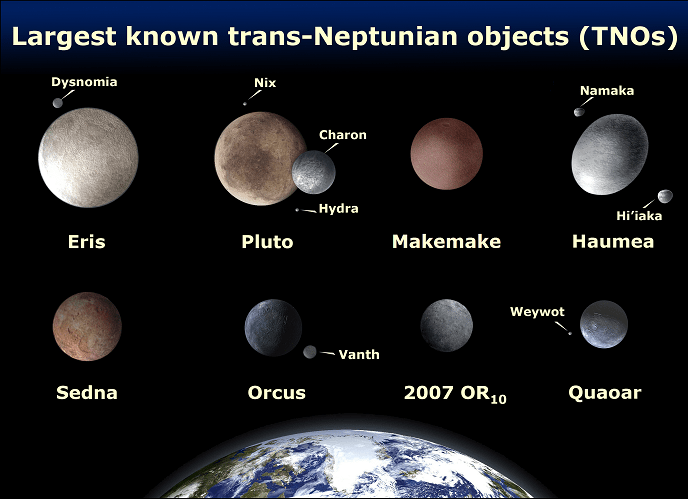
Although this potential ninth planet, called Planet Nine, has not been directly observed or photographed, evidence of its existence was strong enough to prompt Cal Tech researchers to make the announcement last week. Mike Brown and Konstantin Batygin found perturbations in the orbits of other Kuiper Belt Objects that they feel must have been caused by a planet ten times or more larger than Earth. This is how Uranus, Neptune and Pluto were found although the movement caused by Planet Nine's orbit is much more complex. This method of discovery is also something we discuss in class; when scientists noticed something off about the planets' orbits they looked for a reason. Investigation driven by curiosity! Below is an infographic from Space.com that summarizes the findings.

Subscribe to:
Posts (Atom)